
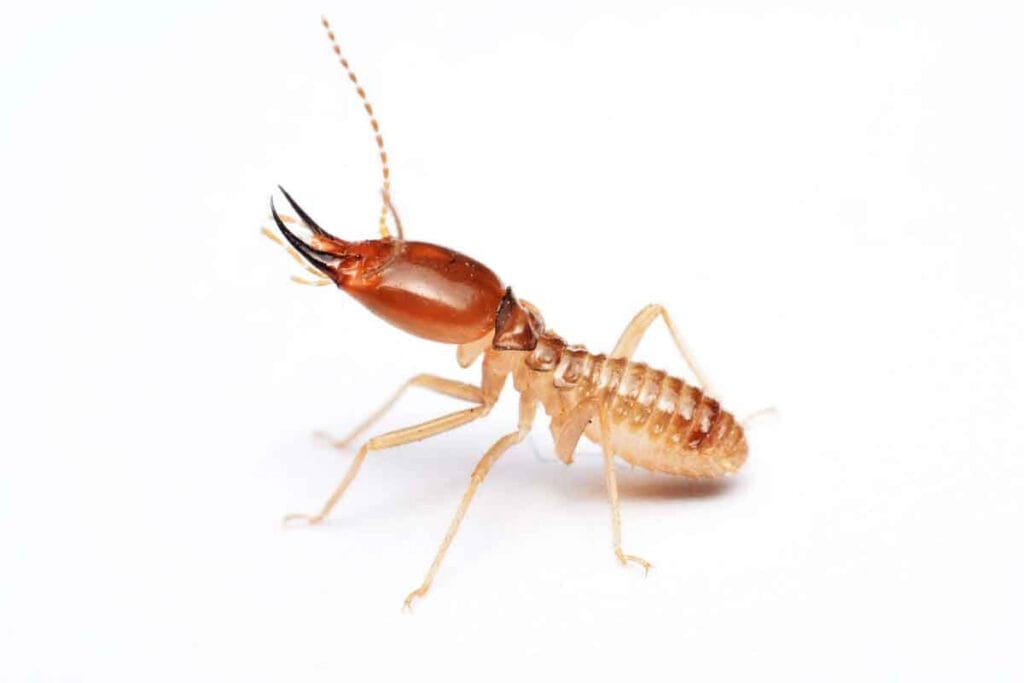
What Are Subterranean Termites?
Eastern subterranean termites (Reticulitermes flavipes) are the most destructive wood-destroying pest in North Carolina, responsible for more property damage than fires, floods, and storms combined. Colonies live underground and can contain hundreds of thousands to over a million individuals.
Habitat & Behavior
These termites build distinctive mud tubes (about pencil-width) from the soil to wood structures, maintaining the moist environment they need to survive. Workers are small (about 3 mm), soft-bodied, and creamy white. Swarmers are dark-bodied with two pairs of equal-length wings and emerge in large numbers on warm spring days.
Termite damage progresses silently from the inside out. Wood may look normal on the surface but be completely hollowed within. Warning signs include mud tubes on foundation walls, bubbling or peeling paint, hollow-sounding wood when tapped, and piles of discarded wings near windows after a swarm.
Prevention & Control
Every home in North Carolina should have annual termite inspections by a licensed professional. Treatment options include liquid soil barriers (termiticides applied around the foundation) and baiting systems that eliminate entire colonies over time. Prevention measures include eliminating wood-to-soil contact, fixing moisture problems, maintaining proper grading for drainage, and keeping mulch, firewood, and wood debris away from your foundation.