
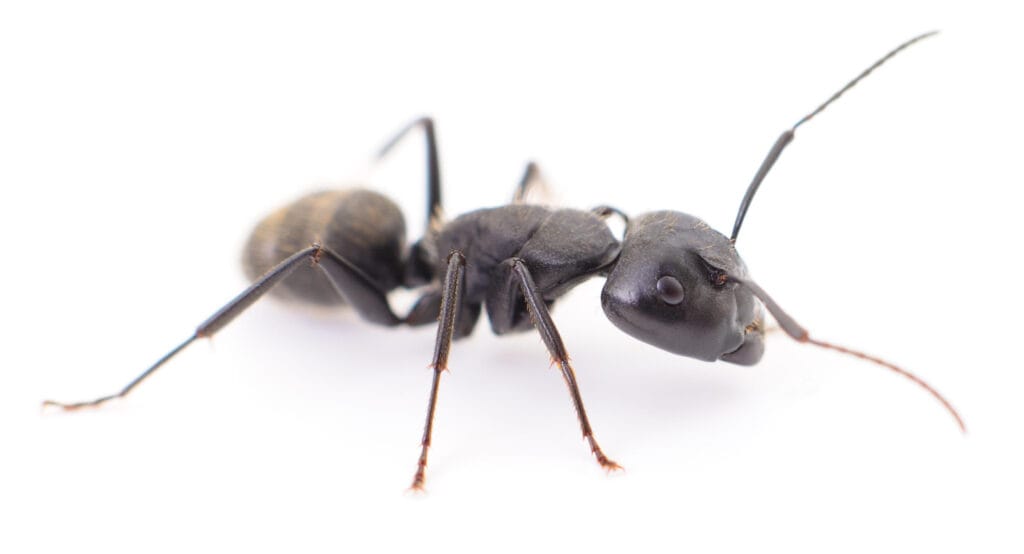
What Are Little Black Ants?
Little black ants (Monomorium minimum) are among the most common household ants in North Carolina. True to their name, they are very small (about 1.5 mm) and uniformly dark brown to jet black. They form orderly single-file trails along baseboards, countertops, and cabinet edges.
Habitat & Behavior
These ants nest in a variety of locations both indoors and outdoors: under rocks, in rotting logs, in wall voids, behind baseboards, and in the mortar joints of masonry. Colonies are moderately sized with multiple queens, typically containing a few thousand workers.
Little black ants are omnivorous, feeding on sweets, grease, meats, fruits, vegetables, and other insects. In kitchens, they are commonly found trailing toward sugar, honey, syrup, and pet food. Outdoors, they tend aphids for honeydew and scavenge dead insects.
Prevention & Control
While they do not bite or sting and are not a health hazard, their persistent trailing through kitchens and bathrooms makes them a nuisance. Control involves following trails back to locate nests, applying targeted baits that workers carry back to the colony, and sealing entry points. Keep food stored in sealed containers, clean up spills promptly, and eliminate standing water to make your home less attractive to foraging workers.