
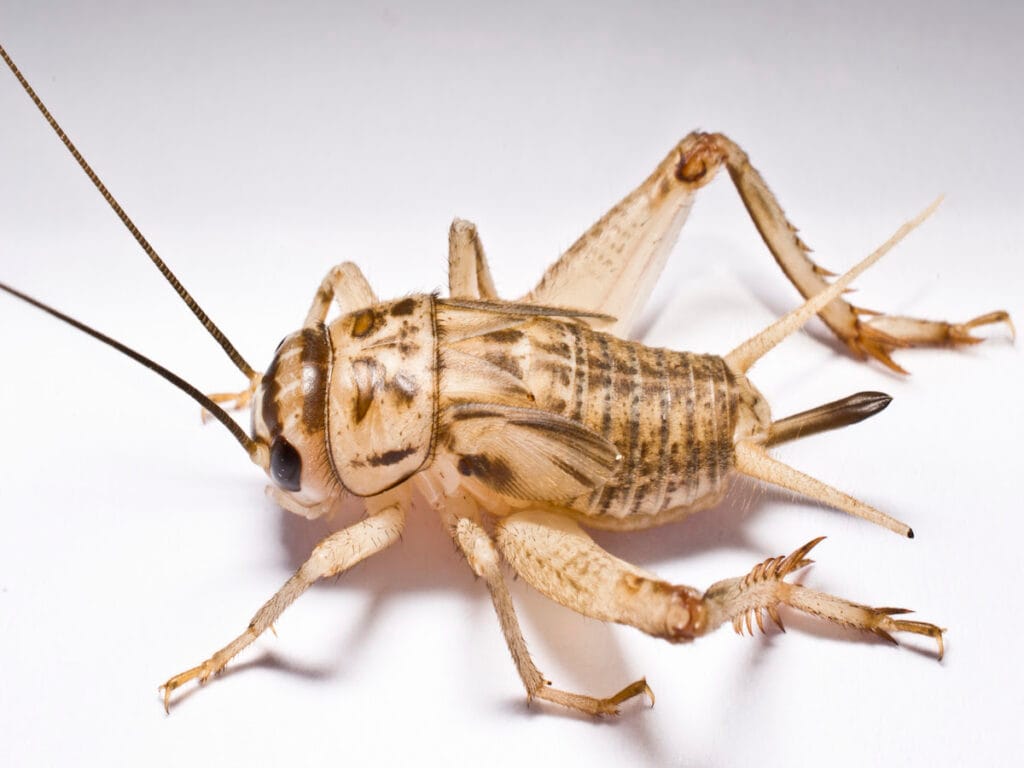
What Are House Crickets?
House crickets (Acheta domesticus) are light yellowish-brown with three dark bands on their head and measure about 16–22 mm long. Originally from Asia, they are now common throughout North Carolina and are well adapted to living inside heated buildings year-round.
Habitat & Behavior
Male house crickets produce a loud, continuous chirping sound at night by rubbing their wings together to attract mates. The chirping rate increases with temperature. While one or two crickets outdoors may be pleasant, crickets inside walls, basements, or bedrooms can cause significant sleep disruption.
House crickets feed on a wide variety of materials including fabric (especially soiled clothing), paper, food scraps, and other insects. They can damage wool, cotton, silk, and synthetic fabrics, leaving irregularly shaped holes. They are attracted to warmth, moisture, and light.
Prevention & Control
To prevent house cricket invasions, reduce outdoor lighting near entry points or switch to yellow bulbs. Seal gaps under doors, around pipes, and in foundation cracks. Remove yard debris, firewood, and tall vegetation from around your foundation. Inside, reduce moisture with dehumidifiers and repair leaks. Sticky traps placed along walls in basements and garages are effective for capturing crickets and monitoring activity.