
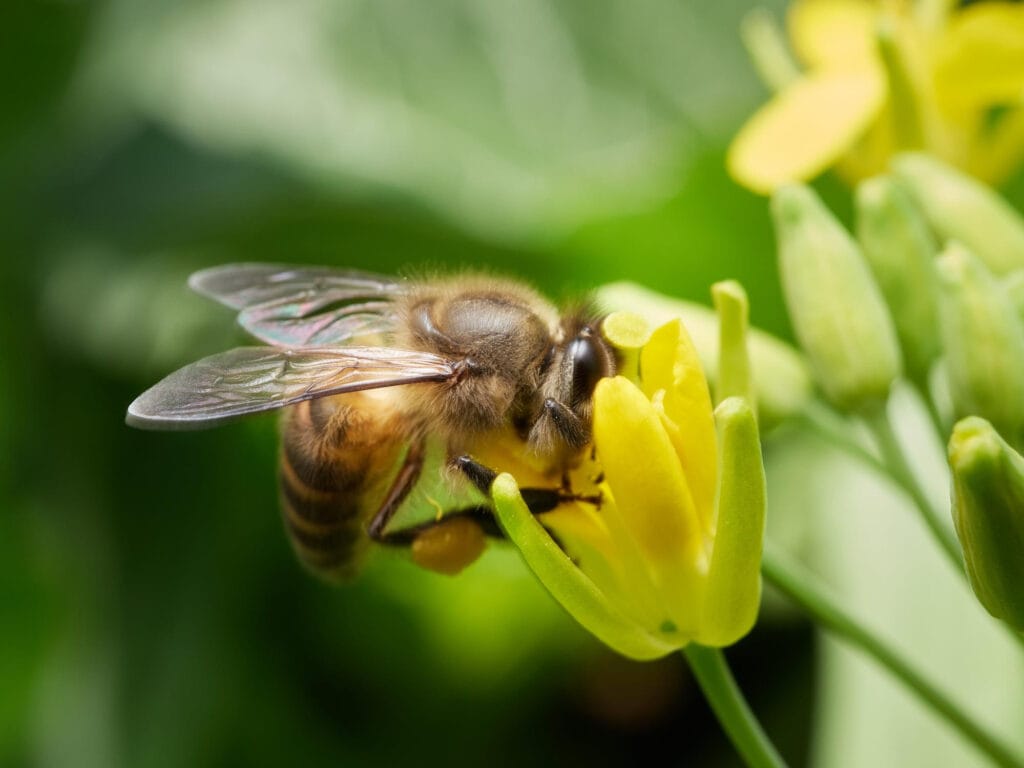
What Are Honeybees?
Honeybees (Apis mellifera) are among the most important pollinators in North Carolina, essential for agriculture and ecosystem health. Workers are about 15 mm long, golden-brown with darker bands, and covered in fine hair. They are generally docile and sting only when defending their hive or when stepped on.
Habitat & Behavior
While honeybees are beneficial, they can become a structural pest when colonies establish hives inside wall voids, attics, soffits, or chimneys. A mature colony can contain 20,000–80,000 bees and produce large quantities of honeycomb. Abandoned hives can attract other pests and cause honey to seep through walls and ceilings.
Honeybee stings inject venom that causes pain, swelling, and redness in most people. For individuals with bee sting allergies, a single sting can cause anaphylaxis—a life-threatening reaction requiring immediate epinephrine treatment and emergency medical care.
Prevention & Control
If honeybees establish a colony in your home, contact a local beekeeper for live removal whenever possible—honeybees are vital pollinators facing population declines. Live removal involves physically relocating the queen, workers, and comb to a new hive. After removal, the cavity must be cleaned of all comb and sealed to prevent re-infestation by new swarms or other pests.