
What Are Gypsy Moths?
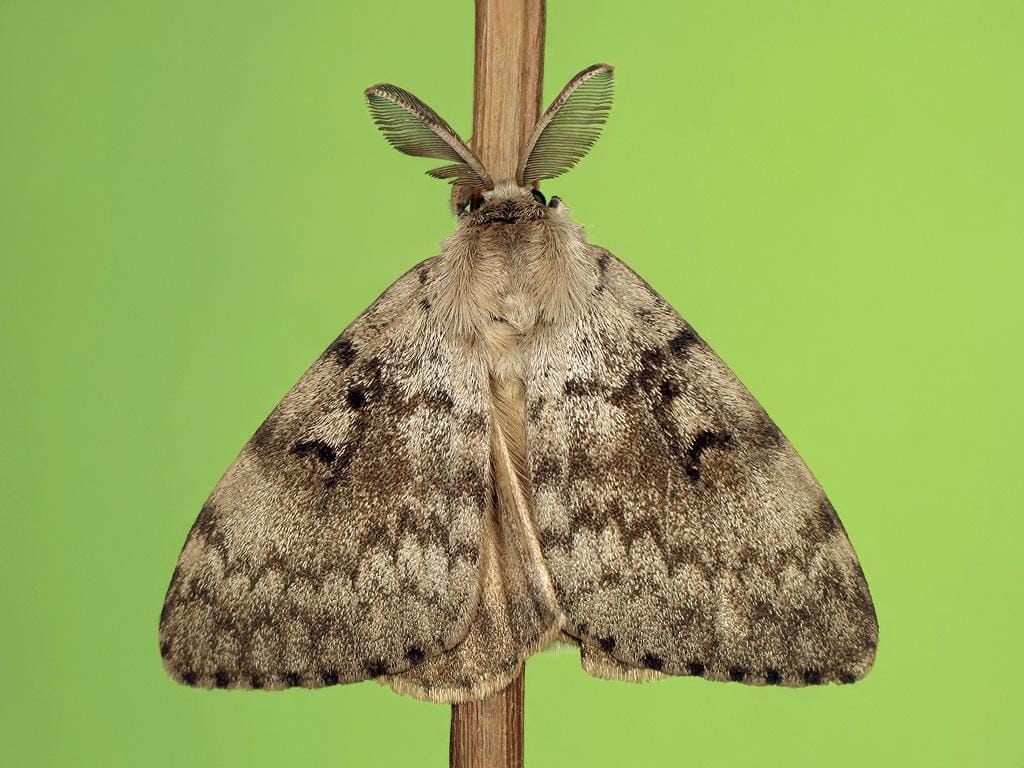
The spongy moth (Lymantria dispar), formerly known as the gypsy moth, is an invasive forest pest that has spread into parts of North Carolina. Male moths are brown with darker markings and can fly, while females are white with dark chevron markings and are flightless. Caterpillars are hairy with distinctive pairs of blue and red dots along their backs.
Habitat & Behavior
Spongy moth caterpillars are voracious defoliators that feed on over 300 species of trees and shrubs, with oaks being their preferred hosts. A heavy infestation can completely strip a tree of its leaves. While healthy trees can usually survive one or two years of defoliation, repeated attacks combined with drought or other stresses can kill trees.
In North Carolina, spongy moth populations are monitored through trapping programs. Egg masses—tan, felt-like patches containing 500–1,000 eggs—are laid on tree trunks, outdoor furniture, vehicles, and firewood, which helps the pest spread to new areas.
Prevention & Control
Homeowners can help by scraping and destroying egg masses found on their property between September and April. Burlap bands wrapped around tree trunks can trap migrating caterpillars. For valuable landscape trees, professional treatments including trunk injections or targeted sprays may be warranted during outbreak years.