
What Are Carpenter Bees?
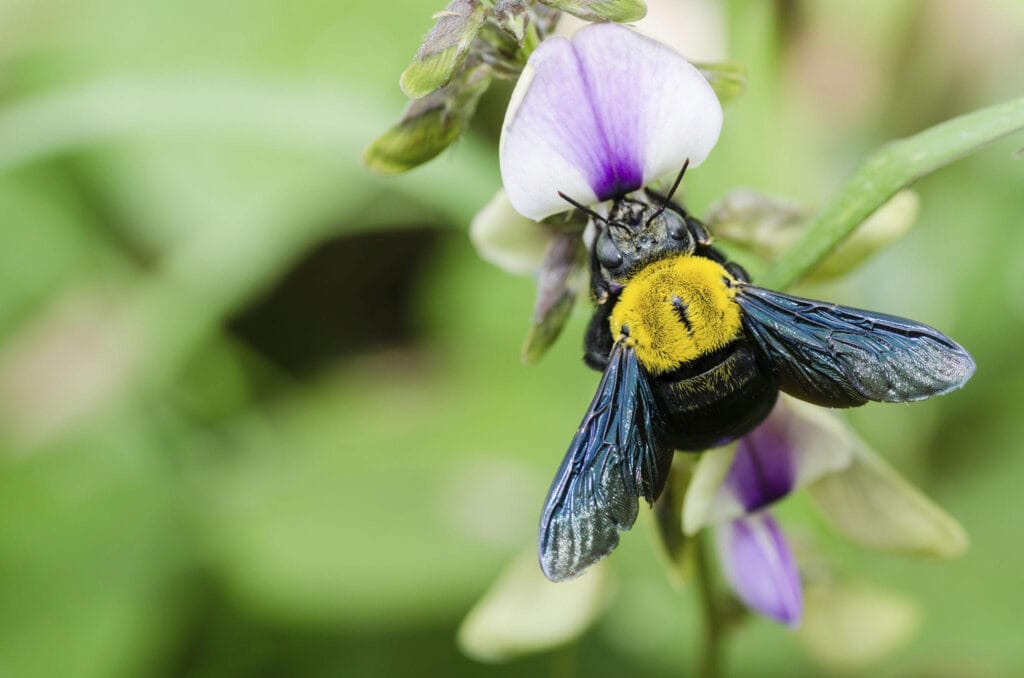
Carpenter bees (Xylocopa virginica) are large, robust bees commonly seen in North Carolina from April through October. They closely resemble bumble bees but can be distinguished by their smooth, shiny black abdomen, unlike the fuzzy abdomen of bumble bees. Adults are about 1 inch long.
Habitat & Behavior
Female carpenter bees bore perfectly round, half-inch diameter holes into unpainted or weathered softwood to create nesting galleries. Preferred targets include deck rails, fascia boards, eaves, pergolas, and outdoor furniture. Each gallery can extend 6–10 inches and may branch into multiple chambers.
While a single hole may seem minor, carpenter bees return to the same wood year after year, expanding existing galleries and creating new ones. Over several seasons, the cumulative damage can weaken structural elements. Woodpecker damage often follows as they drill into the wood seeking carpenter bee larvae.
Prevention & Control
Males are territorial and may hover aggressively near people, but they cannot sting. Females can sting but rarely do. Prevention includes painting or staining exposed wood surfaces, filling existing holes with steel wool and wood putty, and applying targeted treatments to active galleries in spring.