
What Are Big-headed Ants?
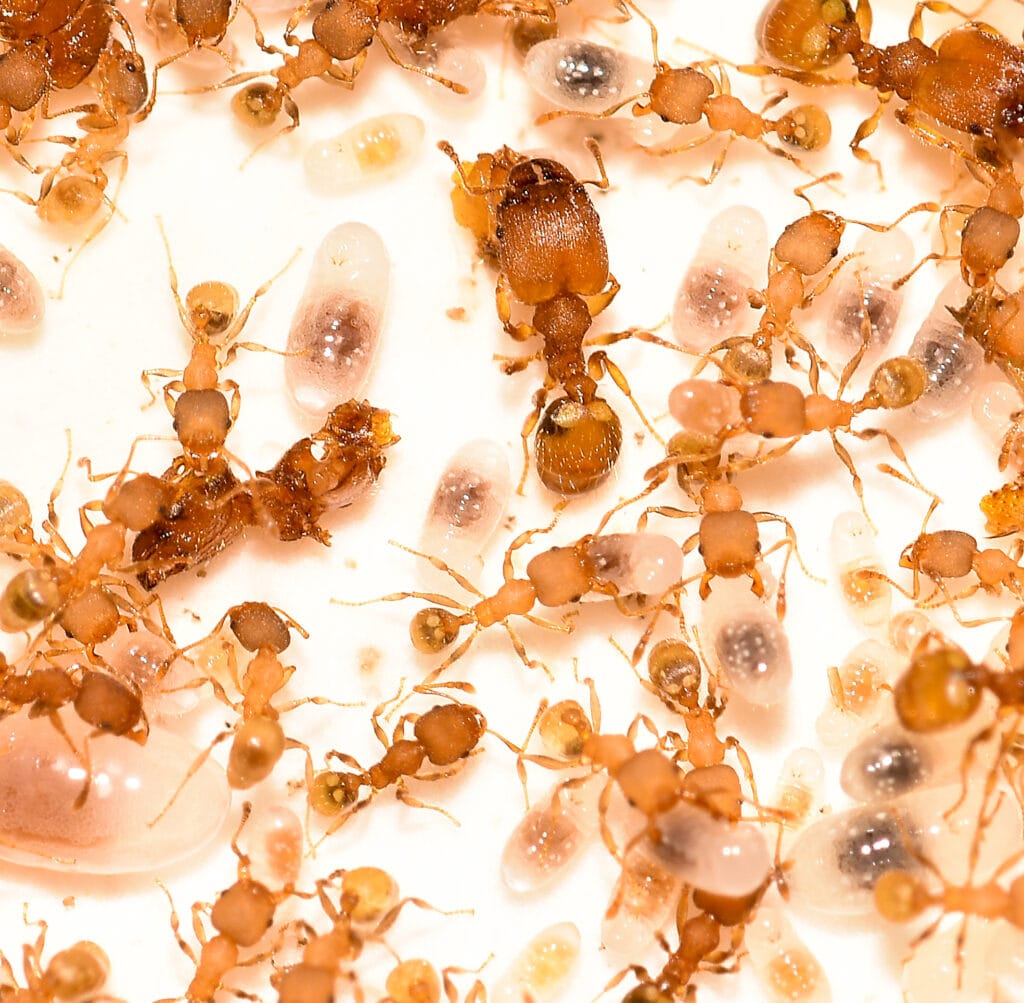
Big-headed ants (Pheidole megacephala) are named for the disproportionately large heads of their major worker caste, also called “soldiers.” Minor workers are small and light brown, while majors have noticeably oversized heads used for crushing seeds and defending the colony.
Habitat & Behavior
Originally from Africa, big-headed ants have become established in parts of North Carolina, particularly in warmer coastal and southern regions. They nest in soil, creating distinctive piles of displaced dirt around foundations, sidewalks, and driveways.
These ants are highly invasive and aggressive toward other ant species, often displacing native colonies. They feed on seeds, insects, honeydew, and household foods. Inside homes, they forage for sweet and greasy foods, trailing along baseboards and countertops.
Prevention & Control
Big-headed ant colonies can contain multiple queens, making them difficult to eliminate. Their extensive underground tunnel networks can undermine pavement and sidewalks. Professional pest control with targeted baiting programs is usually the most effective approach for managing these persistent invaders.