
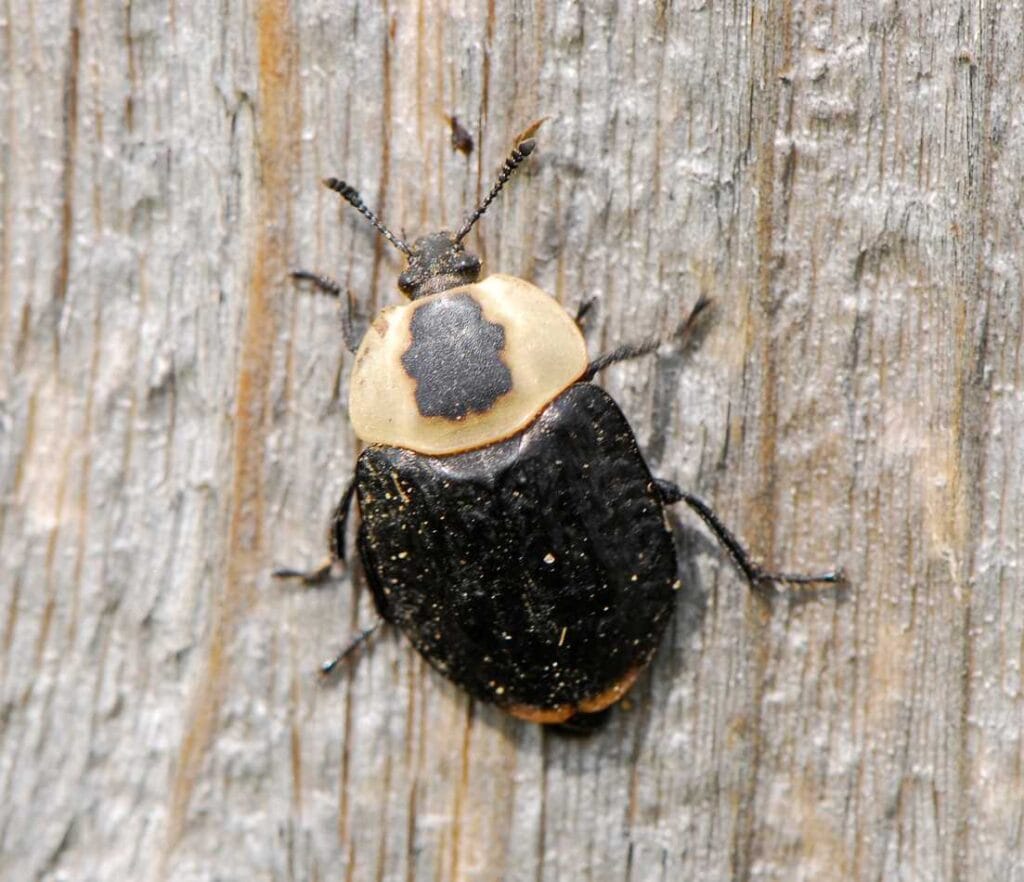
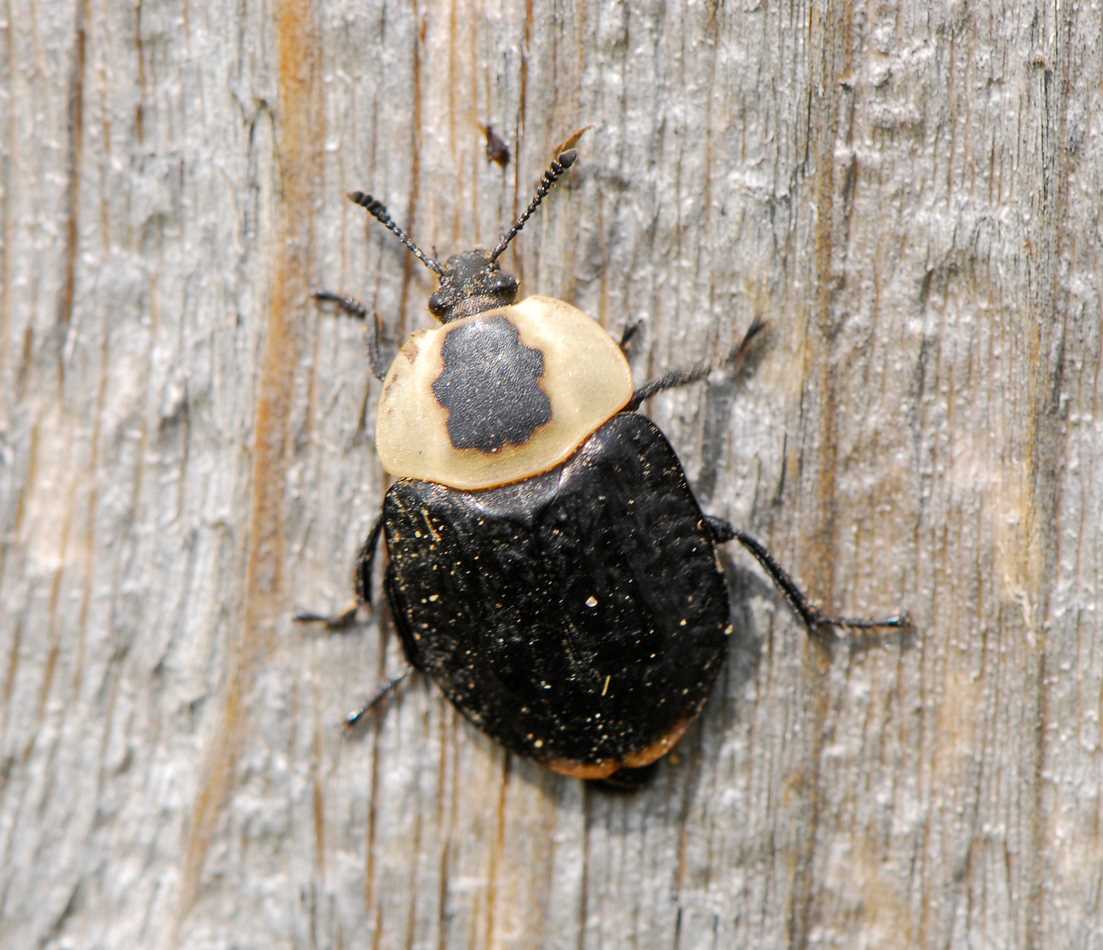
The American carrion beetle is also known by its scientific name, necrophilia Americana. It gets its name from the prominent role that the flesh of dead animals plays in its existence. For example, it lays its eggs in or around carrion, and the larvae that emerge feed on the animal remains. The beetles are also known to feed on fungi and rotting fruit. This article will discuss their life cycle, where these beetles live, how to identify American carrion beetles.
Identifying an American Carrion Beetle
The American carrion beetle should not be confused with the endangered American burying beetle. Both insects are part of the same North American beetle family known as Silphidae. The black larvae on both types of beetles have an armored look to them.
The beetles themselves are black with a yellow shoulder area, although the coloring varies to a degree from northern to southern areas. The beetles can resemble bumble bees when they are in flight. By contrast, the larger American burying beetle features shiny black and orange-red coloration. Also, the burying beetle is about 1.0 to 1.4-in long, while the smaller American carrion beetle is 0.5 to 0.9-in long.
American Carrion Beetle Habitat
American carrion beetles are found in most areas of the United States that are east of the Rocky Mountains. They more commonly reside in moist environments, and they will be more active on warmer days. As the beetles fly about, their sense of smell alerts them to the presence of dead animals where they will most likely be found.
Lifecycle of an American Carrion Beetle
During the daylight hours of the spring, summer, and fall months, American carrion beetles will arrive at the carcasses of dead animals several hours after the flies arrive. There, they mate and begin to lay their own eggs.
The emerging beetle larvae will feed on both the raw flesh and the other larvae within it. The adult beetles will often consume other feeding insects to eliminate competition for food. This makes it easier for the beetle larvae to adequately feed and survive. The larvae eventually burrow into the surrounding soil where they spend the winter. They emerge from their pupal stage the next spring when they mature into adult beetles.
American Carrion Beetle Risks
Mites are known to frequently attach themselves to the American carrion beetle as it moves from one dead carcass to another. At each stop along the way, the mites drop from the beetle to also feed on the dead flesh. Therefore, from a pest control standpoint, this type of beetle poses a dual challenge.
Find American Carrion Control Services at Clegg’s Pest Control Today
The best way to control an American carrion beetle infestation is to contact the pest control professionals at Clegg’s Pest Control. For more information about how to control the American carrion beetle, contact Clegg’s online or via phone at 888-672-5344.