
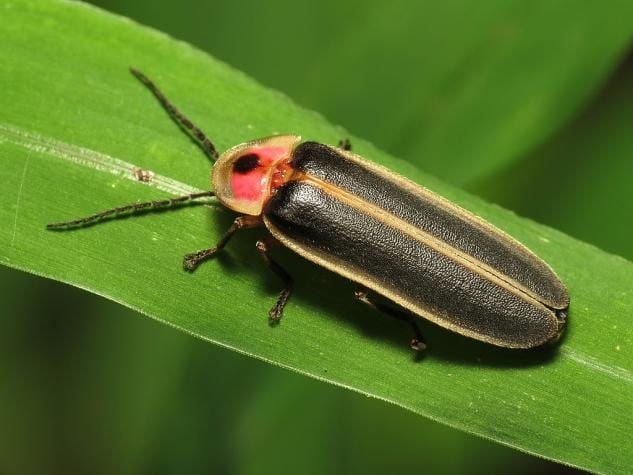
What Is the Big Dipper Firefly?
The big dipper firefly (Photinus pyralis) is the most common firefly species in North Carolina and is responsible for the familiar blinking lights seen on warm summer evenings. Adults are about 10–14 mm long with a dark brown or black body and a distinctive red-orange pronotum edged in yellow.
Habitat & Behavior
Male big dipper fireflies produce their characteristic J-shaped flash pattern while flying, which gives the species its name. Females respond from the ground or low vegetation, and the pair uses these light signals to find mates.
Fireflies are generally beneficial insects. Their larvae are predators that feed on slugs, snails, and other soft-bodied invertebrates in the soil. They are not considered pests and do not cause structural damage or pose health risks to humans.
Prevention & Control
However, declining firefly populations are a concern in North Carolina due to habitat loss, light pollution, and pesticide use. If you see fireflies around your property, it is a positive sign of a healthy local ecosystem. Minimizing outdoor lighting and reducing pesticide use in garden areas can help support local firefly populations.