
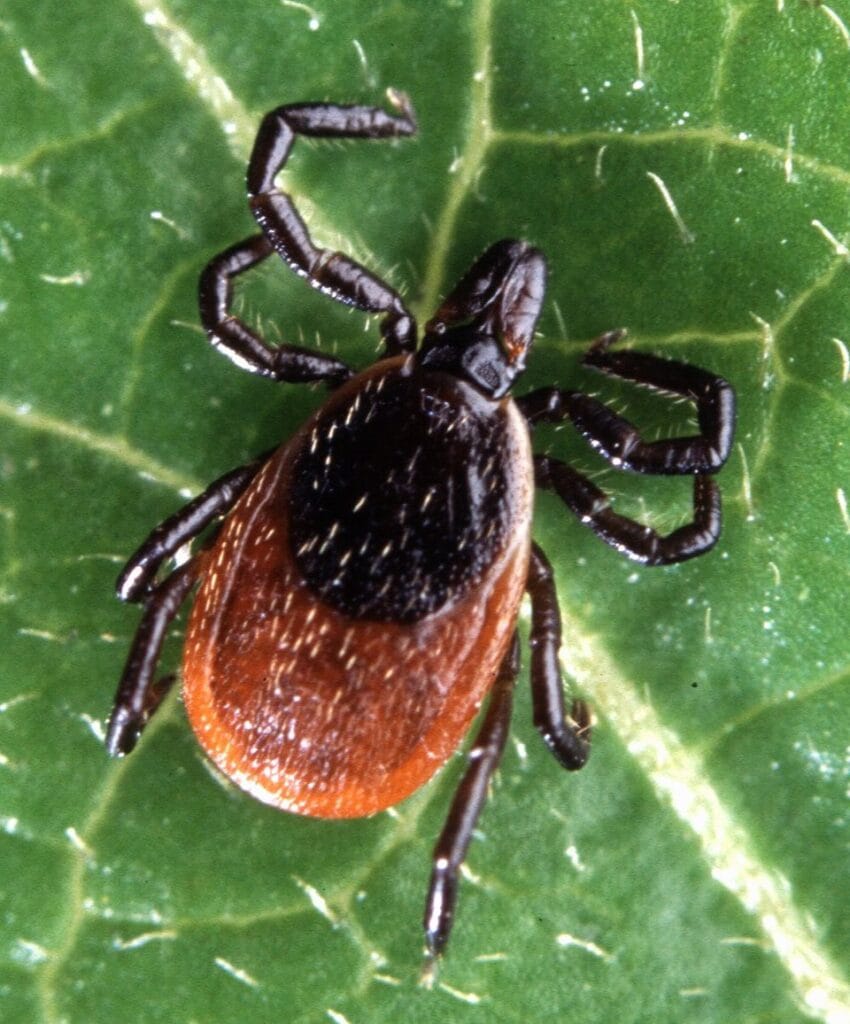
What Is the Deer Tick?
The deer tick (Ixodes scapularis), also known as the blacklegged tick, is the primary vector for Lyme disease in North Carolina. Adults are very small—about 3 mm unfed—with a dark brown or black shield and reddish-orange body. Nymphs are even smaller, roughly the size of a poppy seed.
Habitat & Behavior
Deer ticks are active year-round in North Carolina, though nymphs are most active in spring and summer while adults are most active in fall and winter. They are found in wooded areas, leaf litter, tall grass, and along trails. They do not jump or fly—they wait on vegetation with outstretched legs (“questing”) for a passing host.
In addition to Lyme disease, deer ticks can transmit anaplasmosis, babesiosis, and Powassan virus. A tick typically must be attached for 36–48 hours to transmit Lyme disease, making prompt removal critical.
Prevention & Control
Protect yourself by wearing light-colored clothing, tucking pants into socks in tick habitat, and using DEET or permethrin-based repellents. Check for ticks after outdoor activities and shower within two hours. Around your property, keep grass short, remove leaf litter, and create a 3-foot barrier of wood chips or gravel between lawns and wooded areas.