
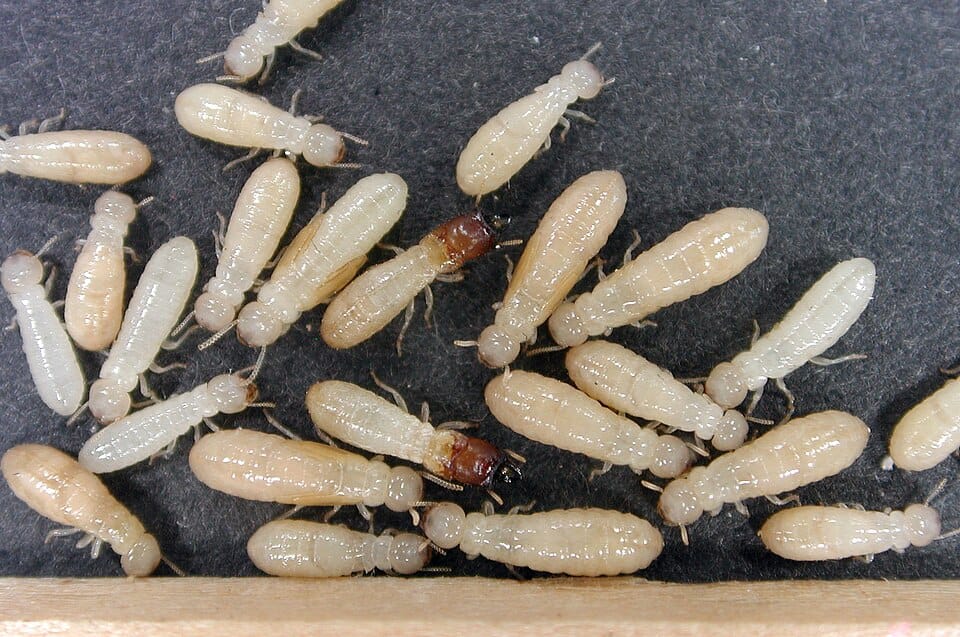
What Are Drywood Termites?
Drywood termites (Cryptotermes and Incisitermes spp.) differ from subterranean termites in that they live entirely within the wood they consume, requiring no contact with soil. They extract moisture directly from the wood and the humidity in the air, allowing them to infest wood well above ground level.
Habitat & Behavior
In North Carolina, drywood termites are most common in coastal areas. They infest structural timbers, furniture, picture frames, and any dry, sound wood. Colonies are smaller than subterranean termite colonies—typically a few thousand individuals—but multiple colonies can infest a single structure.
The most distinctive sign of drywood termites is their fecal pellets: small, hard, six-sided pellets that accumulate in piles below “kick-out” holes in infested wood. These pellets look like coarse sand or coffee grounds. You may also notice discarded wings from swarmers, which typically emerge on warm evenings from late spring through fall.
Prevention & Control
Treatment options include localized spot treatments for isolated infestations and whole-structure fumigation for widespread problems. Regular inspection of attic framing, window and door frames, and furniture is important for early detection. Sealing wood surfaces with paint or finish provides some protection against new infestations.