
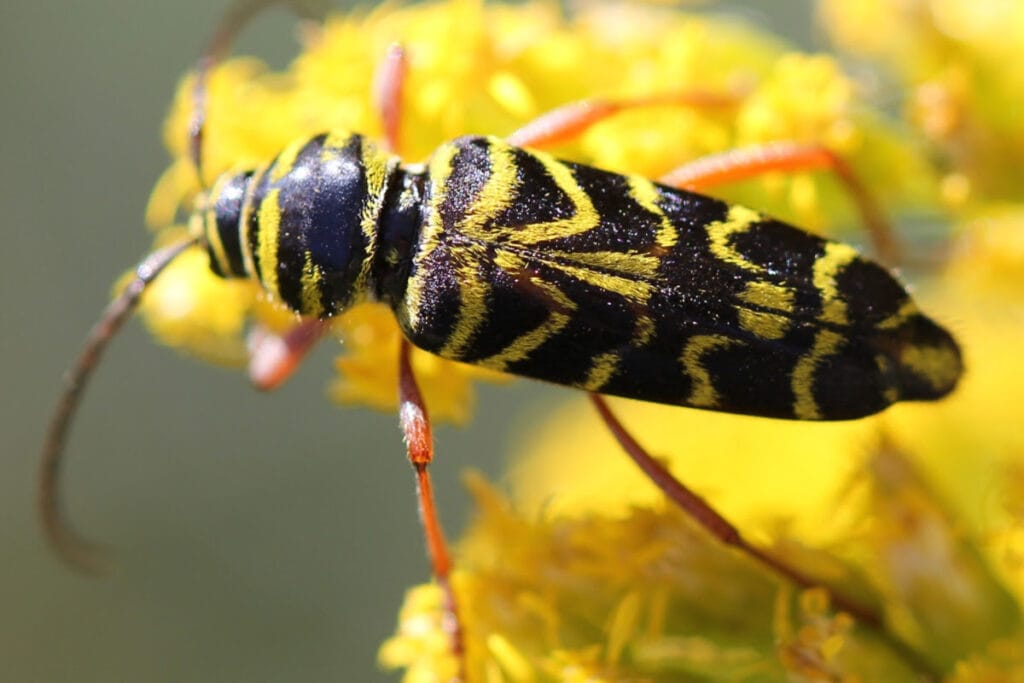
What Is the Locust Borer Beetle?
The locust borer beetle (Megacyllene robiniae) is a striking wood-boring beetle found in North Carolina. Adults are about 20 mm long, black with bright yellow bands in a W-pattern across their wing covers, closely mimicking the appearance of a wasp. They are most commonly seen in late summer and fall feeding on goldenrod pollen.
Habitat & Behavior
Despite their wasp-like appearance, locust borer beetles are harmless to humans—they do not sting or bite. However, they are significant pests of black locust trees. Females lay eggs in bark crevices, and the larvae bore into the heartwood, creating winding tunnels that weaken the tree structurally.
Heavily infested black locust trees develop swollen areas on the trunk, weeping sap, and increased susceptibility to wind breakage. Repeated infestations over several years can kill trees. The beetles prefer stressed trees, so maintaining tree health through proper watering and care can reduce vulnerability.
Prevention & Control
Locust borer beetles are primarily an outdoor and landscape concern rather than a structural pest. If black locust trees on your property show signs of borer damage, consult an arborist for treatment options. In most cases, management focuses on maintaining tree health rather than direct beetle control, as the adults are highly mobile and re-infestation from surrounding areas is common.