
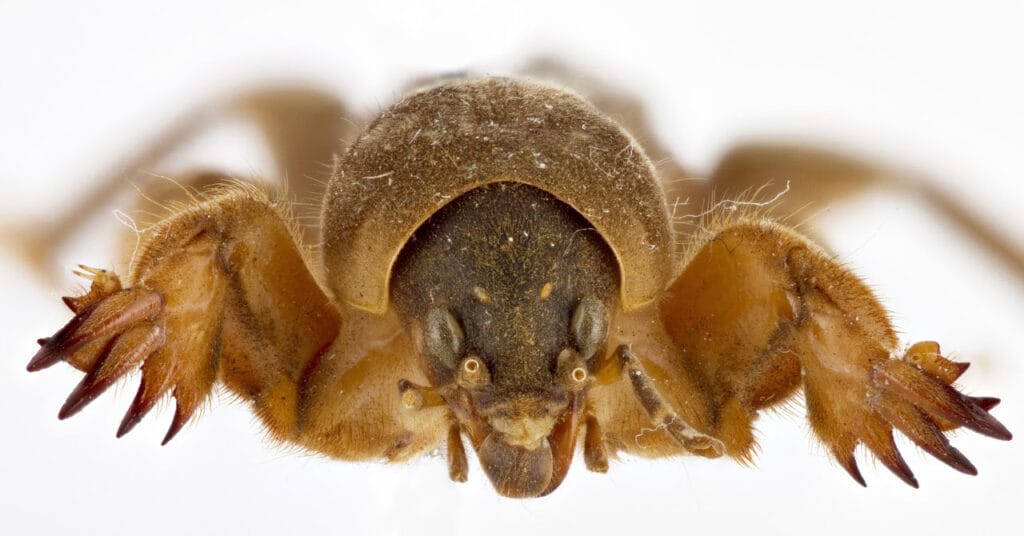
What Are Northern Mole Crickets?
Northern mole crickets (Neocurtilla hexadactyla) are unusual-looking insects adapted for a subterranean lifestyle. They have stout, cylindrical bodies about 25–35 mm long, velvety brown coloring, and powerful, shovel-like front legs designed for digging through soil.
Habitat & Behavior
In North Carolina, mole crickets are most active from spring through fall. They spend most of their lives underground, creating extensive tunnel networks in lawns and garden beds. They surface primarily at night, especially after warm rains, and are attracted to lights.
Mole cricket tunneling damages lawns by disrupting root systems and creating raised ridges of soil visible on the surface. Heavy infestations produce spongy, uneven turf that browns and dies as roots are severed. They also feed on grass roots and other plant material, compounding the damage.
Prevention & Control
Mole cricket damage is most noticeable in spring when overwintering adults resume activity and in late summer when a new generation of nymphs grows rapidly. Treatment is most effective when targeted at young nymphs in early summer. A soapy water flush (2 tablespoons dish soap per gallon of water poured over a 4-square-foot area) can bring mole crickets to the surface for identification and population assessment.