
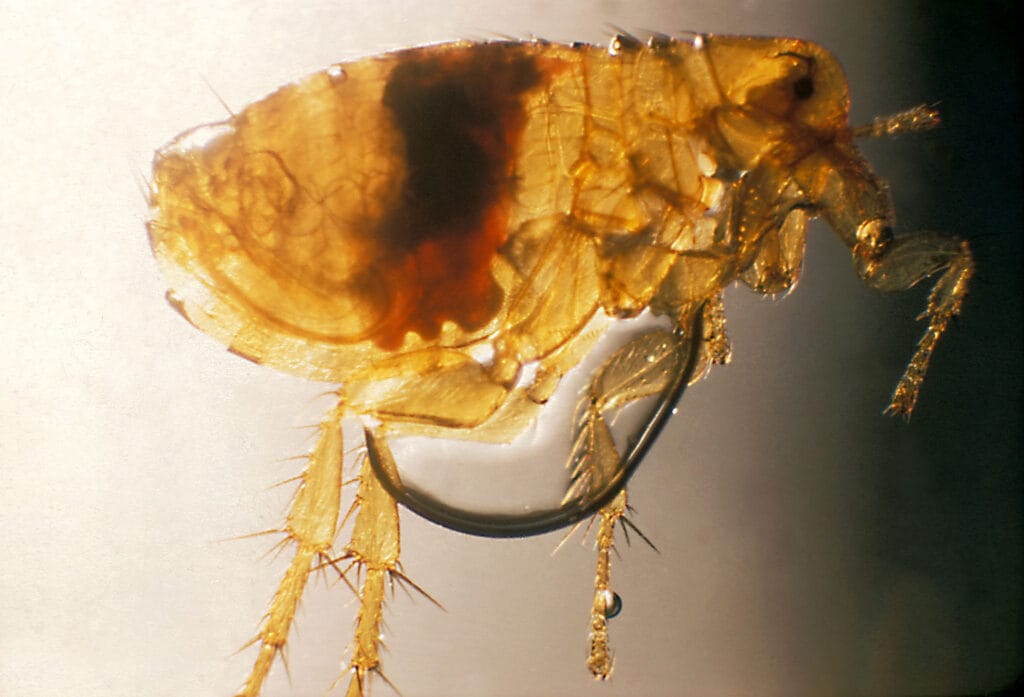
What Are Oriental Rat Fleas?
The oriental rat flea (Xenopsylla cheopis) is historically one of the most medically significant insects, having been the primary vector of bubonic plague (the “Black Death”). While plague is extremely rare in the eastern United States today, oriental rat fleas remain a concern in North Carolina wherever rats are present.
Habitat & Behavior
Oriental rat fleas are small (about 2.5 mm), dark brown, and similar in appearance to other flea species. They are primarily parasites of Norway rats and roof rats but will readily bite humans when their preferred hosts are unavailable—such as when rat control measures remove the host population without addressing the fleas.
In addition to plague, oriental rat fleas can transmit murine typhus, a bacterial disease that causes fever, headache, and rash. They can also serve as intermediate hosts for tapeworms.
Prevention & Control
The key to controlling oriental rat fleas is addressing the rat infestation first. Flea treatment should be coordinated with rodent control—treating for fleas and rats simultaneously prevents displaced fleas from seeking human hosts. Seal entry points to prevent rat re-entry, and treat infested areas with insecticides to kill remaining fleas. Regular monitoring ensures that both rodent and flea populations remain controlled.