
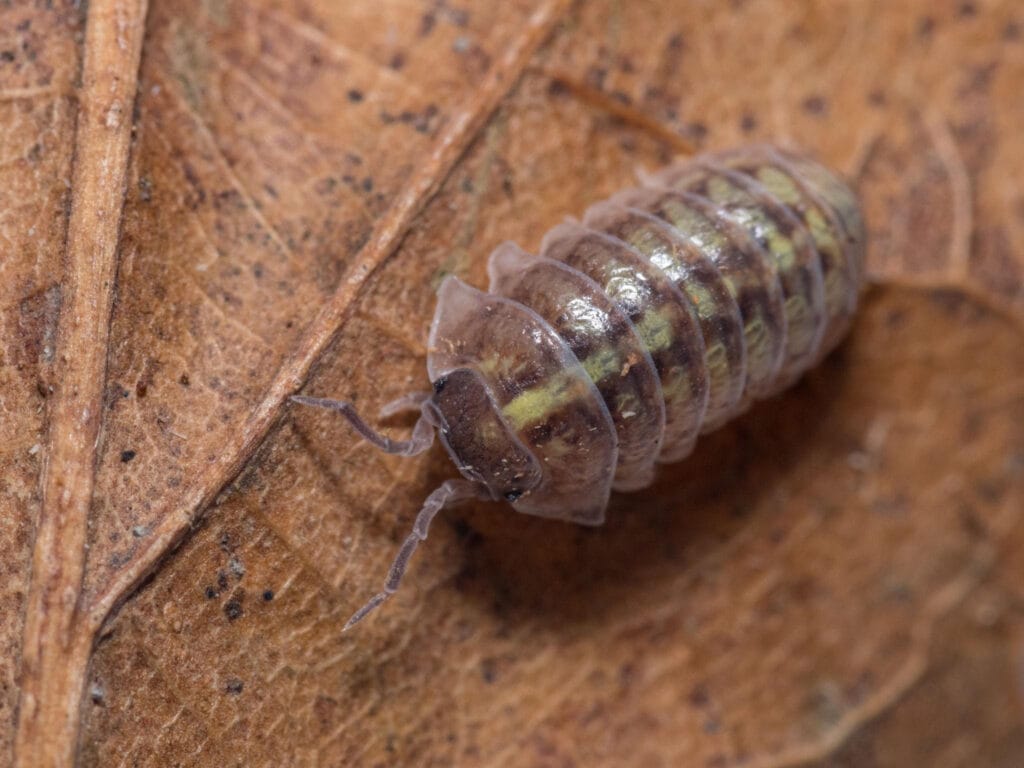
What Are Pillbugs?
Pillbugs (Armadillidium vulgare), commonly called roly-polies or potato bugs, are not actually insects—they are terrestrial crustaceans related to shrimp and crabs. They are oval, dark gray, about 10–15 mm long, and can roll into a tight ball when threatened, which distinguishes them from their close relatives, sowbugs.
Habitat & Behavior
Pillbugs require moisture to breathe through gill-like structures and are found in damp environments throughout North Carolina: under logs, rocks, mulch, leaf litter, and flower pots. They are active primarily at night and feed on decaying organic matter, making them important decomposers in garden ecosystems.
While pillbugs are generally harmless and beneficial in gardens, they can become pests when they enter homes in large numbers or when they feed on seedlings, tender plant stems, and ripe fruits in contact with soil. Heavy populations can damage strawberries, young transplants, and other ground-level crops.
Prevention & Control
To reduce pillbug invasions, eliminate moisture and hiding spots near your foundation. Pull mulch back from the house, remove groundcover plants touching the foundation, and improve drainage. Seal gaps under doors and around basement windows. In gardens, use raised beds or barriers to protect vulnerable seedlings, and avoid over-watering.