
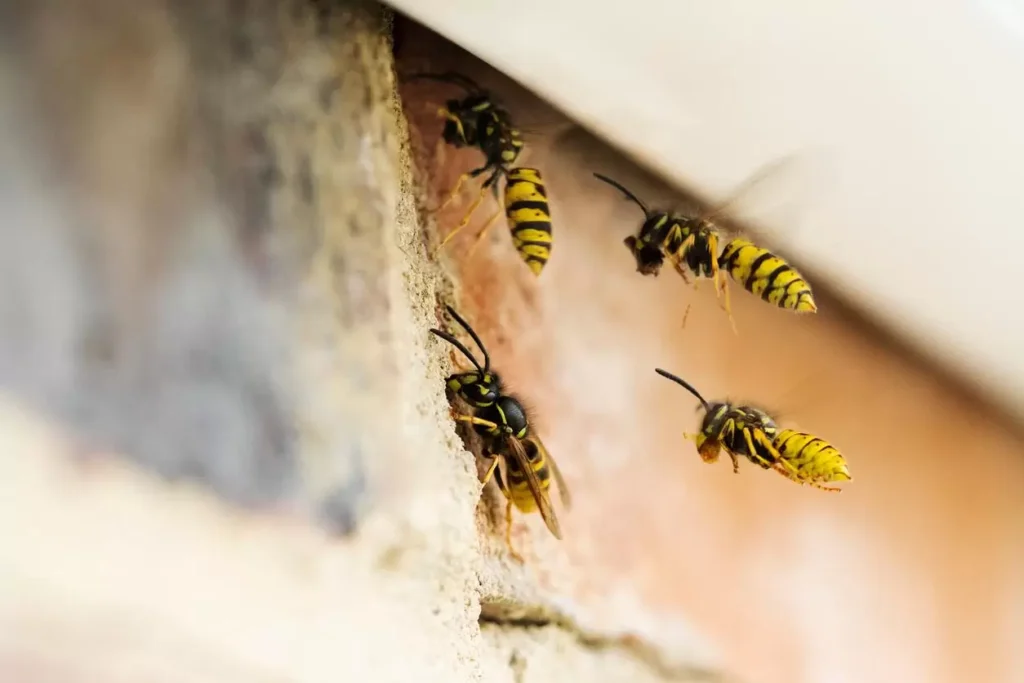
Wasps, Yellow Jackets & Bald-Faced Hornets in North Carolina
North Carolina is home to several species of stinging wasps that can turn your yard into a danger zone. Paper wasps, yellow jackets, and bald-faced hornets all belong to the Vespidae family, and unlike honeybees, they can sting multiple times without dying. These pests become especially aggressive from late spring through early fall as their colonies grow, making professional removal essential for your safety.
Whether you’re dealing with a paper wasp nest under your eaves, yellow jackets swarming your trash cans, or a bald-faced hornet nest hanging from a tree, Clegg’s Pest Control has you covered. We offer expert commercial wasp control and residential wasp control throughout North Carolina to eliminate these stinging pests quickly and safely.
Types of Wasps in North Carolina
Paper Wasps
Paper wasps are the most commonly encountered wasps in North Carolina. They’re slender with long legs and a narrow waist, typically brownish with yellow or reddish markings. Paper wasps build open, umbrella-shaped nests from chewed wood fibers, often found under eaves, porch ceilings, deck railings, and door frames. While they’re generally less aggressive than yellow jackets, paper wasps will sting repeatedly if they feel their nest is threatened.
Yellow Jackets
Yellow jackets are among the most aggressive stinging insects in the state. They’re stocky with bright yellow and black banding and are about half an inch long. The eastern yellow jacket (Vespula maculifrons) is the most common species in North Carolina. Unlike paper wasps, yellow jackets typically build enclosed nests underground in abandoned rodent burrows, inside wall voids, or in other concealed spaces. A single colony can contain thousands of workers by late summer.
Yellow jackets are highly territorial and will swarm aggressively when their nest is disturbed — even by vibrations from a lawnmower. They’re also attracted to sugary foods and proteins, which is why they’re notorious for crashing outdoor picnics and barbecues. Their stings are painful and can cause severe allergic reactions in some people.
Bald-Faced Hornets
Despite their name, bald-faced hornets (Dolichovespula maculata) are actually a type of yellow jacket, not a true hornet. They’re easily identified by their black bodies with distinctive white or ivory markings on their face and the tip of their abdomen. They’re larger than common yellow jackets, measuring about three-quarters of an inch long.
Bald-faced hornets build large, enclosed paper nests that can grow to the size of a basketball or larger. These nests are typically found hanging from tree branches, shrubs, utility poles, and the overhangs of buildings. Bald-faced hornets are extremely defensive of their nests and can sting multiple times. They can also spray venom into the eyes of nest intruders, causing temporary blindness. If you spot one of their distinctive gray, football-shaped nests on your property, keep your distance and call a professional.
Identifying Wasps vs. Bees
It’s important to know whether you’re dealing with wasps or bees, as the treatment approach differs. Wasps have smooth, shiny bodies with a distinctly pinched waist, while bees are rounder and fuzzy. Here are some quick identification tips:
- Paper wasps — Slender, long-legged, brownish with yellow markings. Nests are open and umbrella-shaped.
- Yellow jackets — Stocky, bright yellow and black stripes. Nests are usually underground or hidden in walls.
- Bald-faced hornets — Black with white face markings. Build large gray papery nests in trees and on structures.
- Honeybees — Fuzzy, golden-brown. Produce wax combs in cavities. Rarely aggressive away from the hive.
Signs of a Wasp or Hornet Infestation
The most obvious sign of an infestation is seeing multiple wasps or hornets flying around your property regularly. Other signs to watch for include:
- Visible nests — Paper wasp nests under eaves and overhangs; large gray nests in trees (bald-faced hornets); holes in the ground with insects flying in and out (yellow jackets).
- Buzzing sounds — A persistent low humming or buzzing near walls, attics, or underground could indicate a hidden colony.
- Chewed wood surfaces — Wasps scrape wood fibers to build their nests, leaving small bare patches on fences, decks, and siding.
- Increased activity near food — Yellow jackets hovering around trash cans, pet food, or outdoor dining areas.
Prevention Tips
While professional treatment is the most effective solution, these steps can help reduce wasp and hornet activity around your property:
- Seal entry points — Caulk cracks and gaps around windows, doors, soffits, and your foundation to prevent wasps from nesting inside walls.
- Manage trash and food — Keep garbage cans tightly sealed and clean up food and drink spills immediately, especially outdoors.
- Remove fallen fruit — Rotting fruit from trees attracts yellow jackets and other wasps.
- Inspect your property regularly — Check eaves, gutters, sheds, playsets, and tree branches for new nests in early spring when colonies are small and easier to address.
- Avoid DIY nest removal — Disturbing a nest, especially a yellow jacket or bald-faced hornet nest, can trigger a mass stinging attack. Always call a professional.
Schedule Wasp & Hornet Control From Clegg’s
Don’t risk painful stings or dangerous allergic reactions by trying to handle wasps, yellow jackets, or bald-faced hornets on your own. Clegg’s Pest Control has the equipment, training, and experience to safely remove nests and eliminate colonies of all sizes. We also offer preventive treatment plans to keep stinging insects from returning season after season.
Get started by finding a team of exterminators near you today! You can also contact us online to schedule your free inspection, or call us at (888) MR-CLEGG.