
Clegg's Has Been Protecting Raleigh Homes for Over 60 Years
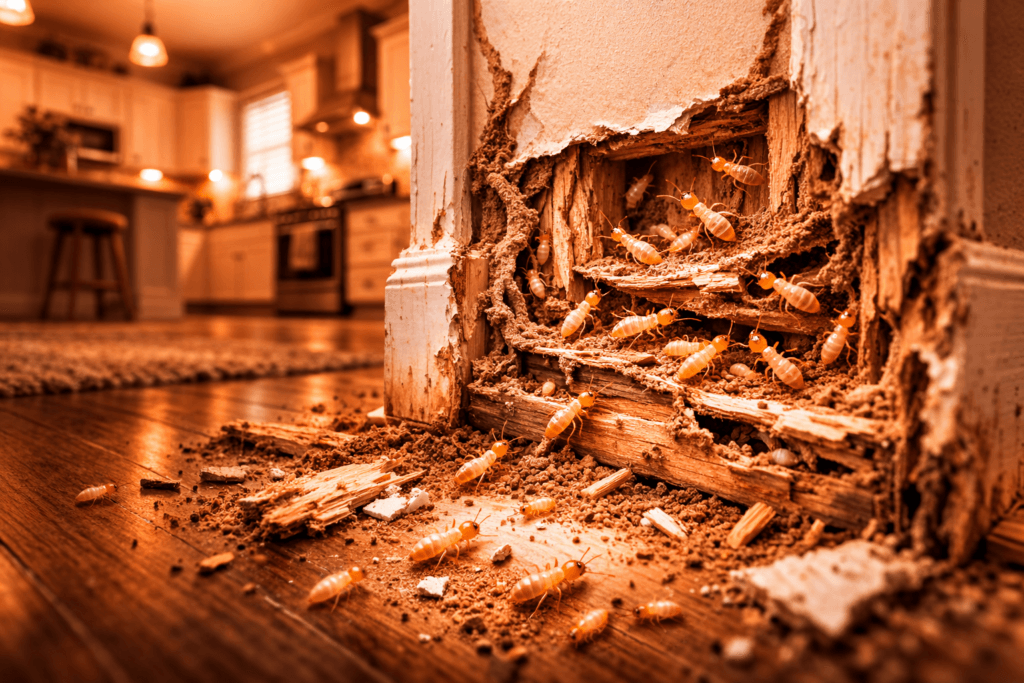
North Carolina’s warm, humid climate makes the Triangle one of the most active termite zones in the entire Southeast.
Every year, thousands of Raleigh homeowners discover damage they never saw coming — soft baseboards, hollow-sounding studs, tiny mud tubes running up foundation walls. By the time most people notice these signs, the colony has been feeding for months.
Clegg’s Pest Control has been handling pest control in Raleigh since 1964. That’s over half a century of crawling under houses in Five Points, inspecting slab foundations in North Hills, and treating active infestations out near Brier Creek and Wake Forest. We’ve seen just about every termite situation this city can throw at a homeowner — and we know how to fix it.
Below you’ll find out how we identify termite infestations in Raleigh homes and how to eradicate it.
Liquid Termite Control
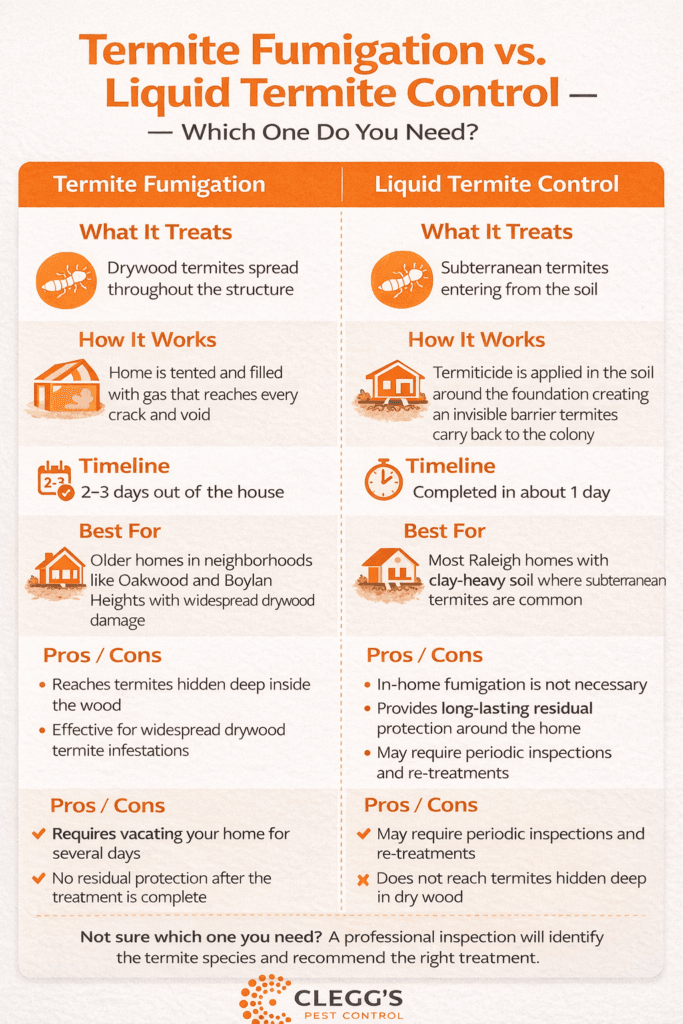
For most Raleigh homes dealing with subterranean termites — which are by far the most common type in the Triangle — liquid termite control is the go-to solution.
How Liquid Treatment Works
A liquid termiticide gets applied around the perimeter of your home’s foundation, creating a treated zone in the soil that termites can’t pass through without being exposed.
Modern liquid treatments are non-repellent, meaning:
- Termites don’t detect the treatment in the soil
- They walk right through it and carry the product back to the colony
- Over a period of weeks, the entire colony collapses
- It’s more effective than old-school barrier chemicals that just pushed colonies to find another way in
Why It Works So Well in Raleigh
The clay-heavy soils around Raleigh hold the treatment in place longer than sandy soils would, giving you extended protection. Homes in areas like Midtown, ITB (Inside the Beltline), and along Capital Boulevard benefit from this because the soil composition retains the treatment well.
The treatment usually takes a day to complete. Our technicians trench around the foundation, apply the termiticide, and backfill. For homes with concrete patios, porches, or driveways against the foundation, we drill small holes through the concrete to treat the soil underneath, then patch them when we’re done.
Termite Fumigation
When a termite infestation has spread deep into the structure of a home — through wall cavities, attic framing, even furniture — spot treatments sometimes aren’t enough. That’s when termite fumigation becomes the right call.
How Fumigation Works
The home gets sealed under a large tent. A fumigant gas is released inside, and it penetrates every crack, joint, and void in the structure. The gas reaches termites no matter where they’re hiding — behind drywall, inside support beams, in spaces you can’t even access with a drill.
Here’s what to expect during the process:
- Your family and pets need to be out of the house for 2–3 days
- The entire structure is sealed under a specialized tarp
- Fumigant gas penetrates every gap and void in the building
- Our team performs air quality testing before you move back in
Raleigh homeowners in older neighborhoods like Oakwood, Boylan Heights, and Cameron Park tend to see more drywood termite activity because of the age of the wood in those homes. If your inspector finds widespread damage across multiple areas, fumigation is usually the fastest path to a termite-free home.
Why Termite Control Matters in Raleigh, NC
Raleigh sits right in the middle of what pest control professionals call a “heavy” termite pressure zone. The combination of warm temperatures, regular rainfall, and high humidity creates near-perfect conditions for subterranean termite colonies.
Here are a few numbers that surprise most people:
- Termites cause more than $5 billion in property damage across the U.S. every year
- Homeowners insurance doesn’t cover termite damage — not a dime
- Insurance companies consider it a maintenance issue, so repair bills come straight out of your pocket
We’ve been in crawl spaces under homes near Lake Johnson, Shelley Lake, and Umstead Park where moisture levels were so high that termite colonies had been thriving for years before anyone noticed. Homes near wooded areas and water features are at especially high risk.
Signs You Might Have Termites in Your Raleigh Home
Most of the calls we get start the same way: “I found something weird and I’m hoping it’s not termites.” Here are the warning signs Raleigh homeowners should watch for:
Mud Tubes
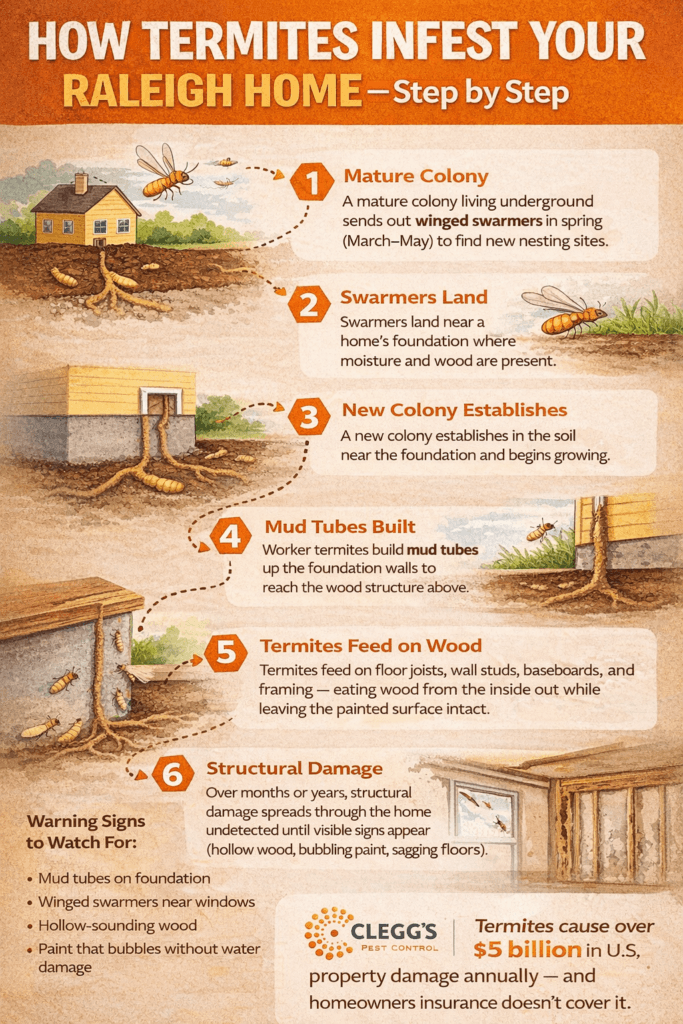
Thin, pencil-width tubes made of dirt and termite saliva that run up your foundation walls. Usually on the exterior, sometimes inside the crawl space. Subterranean termites build these to travel between the soil and the wood in your home.
Swarmers
Every spring in Raleigh — usually March through May — mature colonies release winged termites that fly out to start new colonies. If you see small winged insects near your windows or exterior lights after a warm rain, that’s a strong sign.
People sometimes confuse swarmers with flying ants. Here’s how to tell the difference:
- Termite swarmers have straight antennae and wings that are equal in length
- Flying ants have elbowed antennae and wings of different sizes
Damaged or Hollow-Sounding Wood
Tap on your baseboards, window frames, and door frames. If they sound hollow or feel soft, termites may have eaten through the interior while leaving the painted surface intact. We see this a lot in older Raleigh homes where wood trim sits close to the ground.
Bubbling or Peeling Paint
Paint damage that looks like water damage but isn’t near any plumbing can indicate termite activity underneath the surface.
The Clegg’s Approach to Termite Control
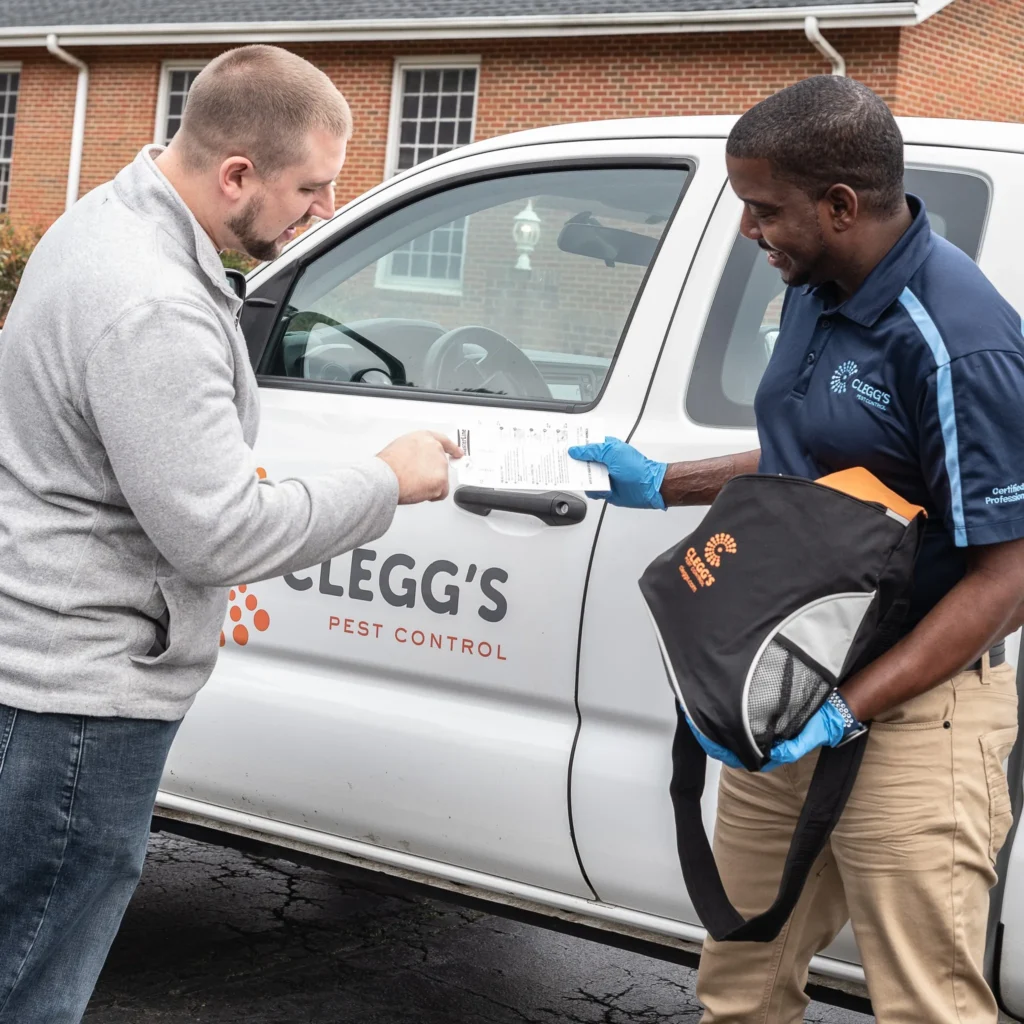
We don’t just show up and start spraying. Every termite treatment starts with a thorough inspection. One of our licensed technicians will examine your home’s foundation, crawl space (or slab), wood structures, and any areas where moisture might be creating conditions termites love.
Based on what we find, we recommend the treatment that fits your situation:
- Liquid termite control around the perimeter to stop new termites from getting in
- Termite fumigation for widespread infestations that have spread through multiple areas
- Combined approaches — a liquid barrier plus direct treatment of active colonies inside the structure
What sets Clegg’s apart is follow-up. Termite control isn’t a one-and-done deal. We offer ongoing monitoring and retreatment plans because the conditions that attracted termites — Raleigh’s climate, the soil, nearby moisture — don’t go away after a single treatment.
When to Call for Termite Control in Raleigh
Call us right away if you see mud tubes, swarmers, or damaged wood. But you shouldn’t wait for visible signs. The best time to call for termite control is before you have a problem.
You should schedule a professional termite inspection if:
- Your home has never been treated for termites
- It’s been more than a few years since your last treatment
- You’re buying a home in Raleigh (most NC real estate transactions require a Wood Destroying Insect Report)
- You’ve noticed any of the warning signs above
Spring is peak swarming season in the Triangle, and our phones ring off the hook from mid-March through June. Schedule your inspection before the rush if you can.
Raleigh Neighborhoods and Areas We Serve
Clegg’s provides termite control across the entire Raleigh metro area. We’re out in these neighborhoods and communities regularly:
- North Hills and Midtown
- Five Points and Cameron Village
- Oakwood and Boylan Heights
- ITB (Inside the Beltline)
- Brier Creek and Falls of Neuse
- North Raleigh and Southeast Raleigh
- Capital Boulevard corridor
We also serve surrounding communities including Cary, Apex, Holly Springs, Garner, Knightdale, Wake Forest, and Fuquay-Varina. If you’re in the Triangle, we can get to you.
Schedule Your Termite Inspection Today
Don’t wait until termites have already caused damage you can’t see. A Clegg’s termite inspection gives you a clear picture of what’s going on under and around your home. If there’s activity, we’ll tell you exactly what we found and what we recommend. If there’s no activity, we’ll help you keep it that way.
Call Clegg’s Pest Control today to schedule your free termite inspection. We’ve been protecting Raleigh homes from termites since 1964 — and we’re not going anywhere.
Termites are actually active year-round in Raleigh because our winters rarely get cold enough to freeze the soil deeply. But you’ll notice them most during swarming season, which runs from about mid-March through May or early June.
The rest of the year, worker termites are still feeding 24/7 — you just don’t see them doing it. This is why annual inspections matter even if you’ve never spotted a swarmer.
Subterranean termites are the most common type in the Raleigh area. They live in the soil and build mud tubes to reach the wood in your home. They need constant moisture, which is why they stay connected to the ground. Liquid termite control is the standard treatment because it targets that soil-to-structure connection.
Drywood termites are less common but we do see them, especially in older homes. They don’t need soil contact — they live entirely inside the wood they’re eating. Because they can be spread throughout a structure, termite fumigation is often the most practical treatment when drywood termites are confirmed.
We get this question a lot, and the honest answer is: not effectively. The store-bought sprays and baits you can find at hardware stores in Raleigh might kill the termites you can see, but they won’t reach the colony.
A typical subterranean termite colony contains hundreds of thousands of individuals, and the queen can live for over 25 years. Without professional-grade products and application methods, you’re treating the surface while the colony keeps growing. Termite control is one of those things where bringing in a professional from the start saves you money in the long run.
For Pest Control Service
Or visit our Locations page to find your local office.
For Pest Control Service
Savings Opportunities
Current Promotions
Clegg's Locations
Find an Office Near You
14 locations serving all of North Carolina.