
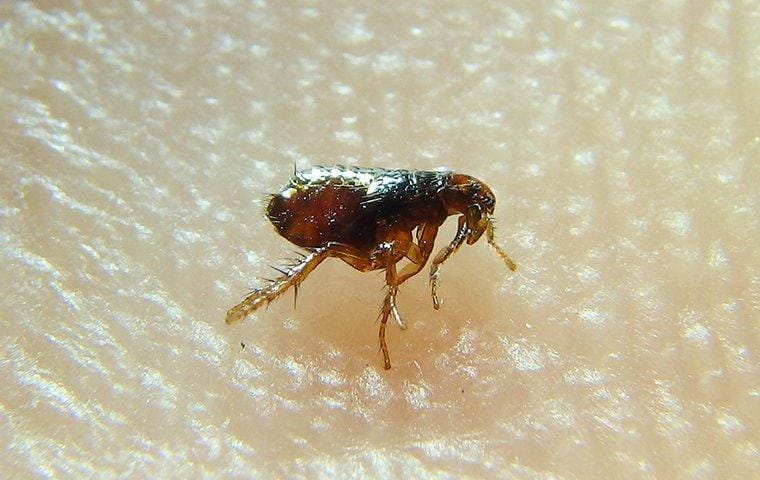
What Are Cat Fleas?
The cat flea (Ctenocephalides felis) is the most common flea species in North Carolina and infests both cats and dogs despite its name. Adults are small (1–3 mm), dark reddish-brown, laterally flattened, and capable of jumping up to 150 times their body length.
Habitat & Behavior
Cat fleas thrive in North Carolina’s warm, humid climate. They complete their life cycle in as little as two weeks under favorable conditions, with eggs, larvae, and pupae developing in carpets, pet bedding, upholstered furniture, and cracks in flooring. A single female can lay up to 50 eggs per day.
Flea bites cause itchy, red welts on humans and can trigger severe allergic dermatitis in pets. Cat fleas can also transmit tapeworms, murine typhus, and cat scratch disease (Bartonella). Heavy infestations cause anemia in young or small animals.
Prevention & Control
Effective flea control requires treating the pet, the indoor environment, and outdoor areas simultaneously. Vacuum frequently, wash pet bedding in hot water, and use veterinarian-recommended flea prevention products year-round. Because flea pupae are resistant to insecticides and can remain dormant for months, professional treatment may require follow-up visits.