
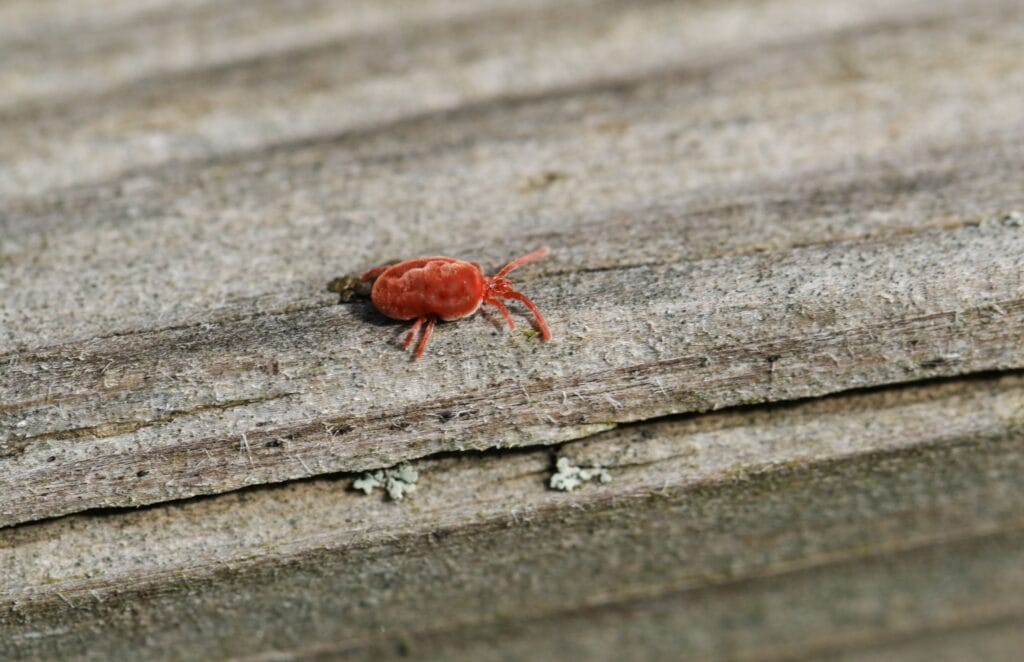
What Are Clover Mites?
Clover mites (Bryobia praetiosa) are tiny, reddish-brown arachnids barely visible to the naked eye at about 0.75 mm long. They have distinctively long front legs that are often mistaken for antennae. Despite their small size, they can invade homes in enormous numbers.
Habitat & Behavior
In North Carolina, clover mites are most active during spring and fall when temperatures are moderate. They feed on grass, clover, and other plants in lawns and are especially common in well-fertilized yards. They do not bite, sting, or transmit diseases.
Clover mites typically enter homes through tiny cracks around windows, doors, and foundations on the sunny side of buildings. When crushed, they leave a red-orange stain on surfaces, which is their body pigment—not blood. This staining is the primary concern with indoor invasions.
Prevention & Control
Prevention includes maintaining a vegetation-free strip of gravel or bare soil 18–24 inches wide around your foundation. Seal cracks around windows and doors, especially on south and west-facing walls. Avoid over-fertilizing lawns near the house, as lush vegetation attracts higher mite populations.