
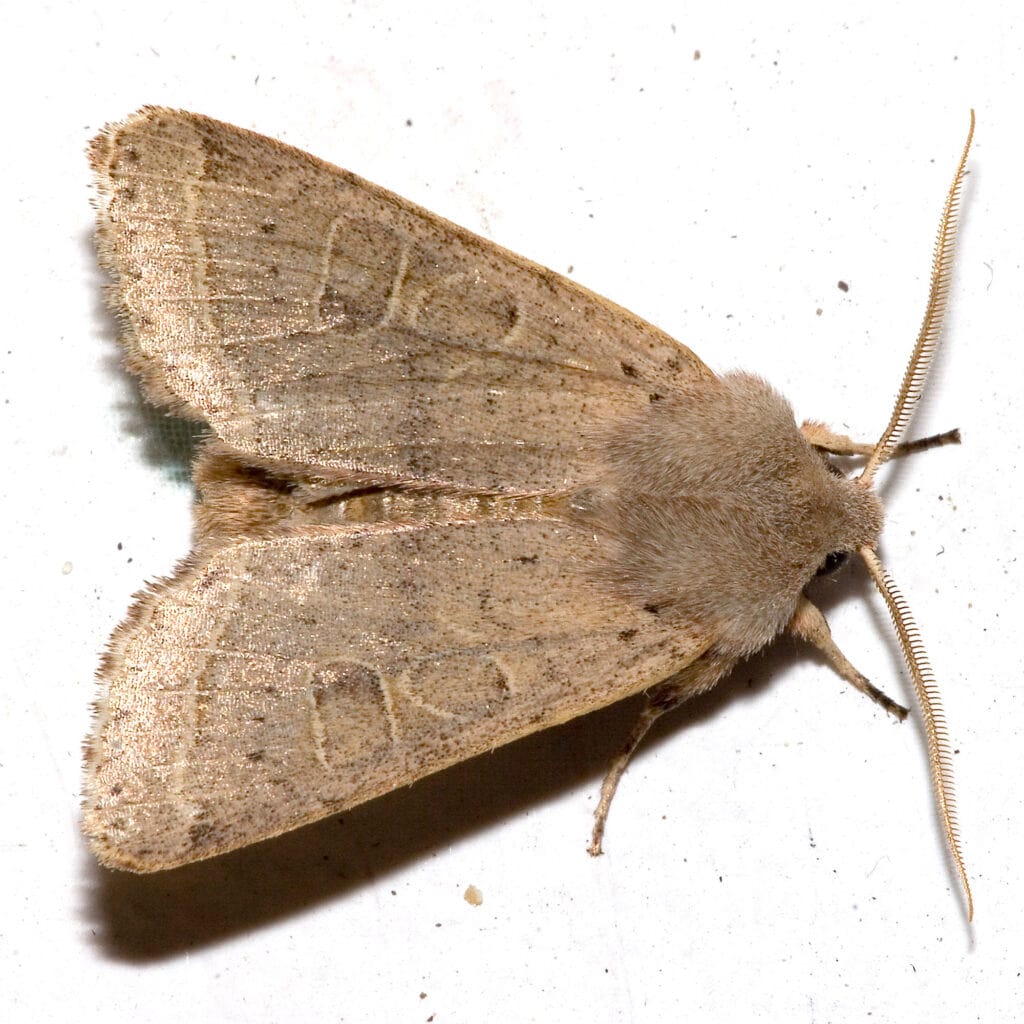
What Is the Common Moth?
Several moth species are common household pests in North Carolina, with clothes moths and pantry moths being the most problematic. The webbing clothes moth (Tineola bisselliella) is small and golden-colored, while the casemaking clothes moth has brownish wings with faint spots.
Habitat & Behavior
Clothes moths target natural fibers including wool, silk, fur, feathers, and leather. Their larvae do the actual damage, chewing irregular holes in garments, blankets, carpets, and upholstered furniture. Soiled or stained items are particularly attractive because the larvae feed on the organic residues.
Pantry moths, such as the Indianmeal moth, infest stored food products. Signs of either type include small holes in fabrics, silken tubes or cases in closets, or webbing in food containers.
Prevention & Control
Prevention for clothes moths includes storing clean woolens in sealed containers, using cedar blocks or lavender sachets, and regularly cleaning closets and drawers. For pantry moths, store dry goods in airtight containers and inspect grocery items before storing. Discard any infested materials promptly. Professional treatment may be needed for established infestations, especially in wall-to-wall carpeting or large textile collections.