
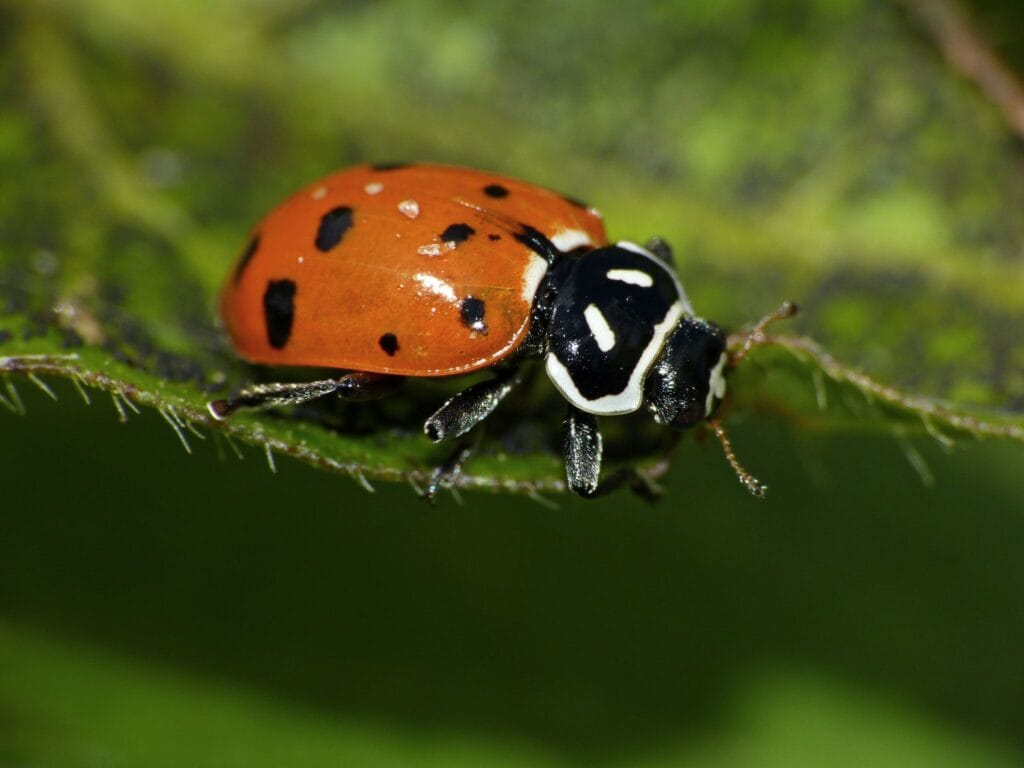
What Is the Convergent Lady Beetle?
The convergent lady beetle (Hippodamia convergens) is a native North American species commonly found throughout North Carolina. They are distinguished by two white converging lines on their pronotum (the area behind the head) and typically have 13 black spots on their orange-red wing covers.
Habitat & Behavior
These beneficial beetles are voracious predators of aphids, scale insects, and other plant pests. A single convergent lady beetle can consume over 5,000 aphids in its lifetime, making them one of the most important natural pest control agents in gardens and agricultural fields.
In fall, convergent lady beetles may aggregate on buildings and enter homes seeking overwintering shelter. While they are harmless and do not reproduce indoors, large numbers can be a nuisance. They may release a mildly unpleasant-smelling fluid when disturbed.
Prevention & Control
If convergent lady beetles enter your home, gently collect them with a soft brush or vacuum and release them outside. Preventive measures include sealing gaps around windows and doors before autumn. Avoid crushing them, as their defensive secretions can stain light-colored surfaces.