
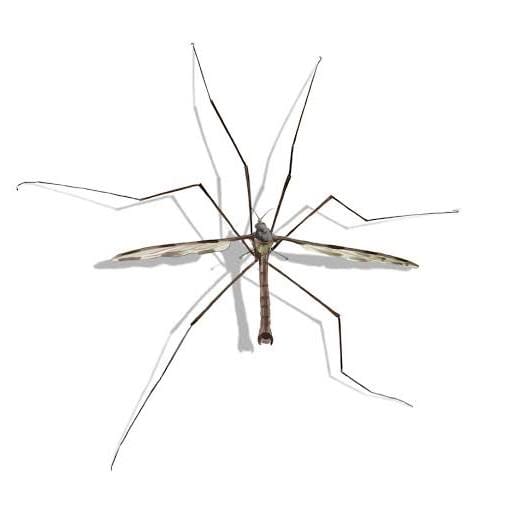
What Is the Cranefly?
Craneflies (family Tipulidae) are delicate, long-legged flying insects often mistaken for giant mosquitoes. With wingspans up to 2.5 inches and dangling legs, they can look intimidating, but they are completely harmless—they do not bite, sting, or feed on blood.
Habitat & Behavior
Adult craneflies are commonly seen in North Carolina from spring through fall, often found resting on walls, screens, and near outdoor lights. Most adult craneflies live only a few days and many species do not feed at all during their brief adult stage.
Cranefly larvae, known as “leatherjackets,” live in soil and feed on decaying organic matter, roots, and grass. In large numbers, they can damage lawns by feeding on grass roots, creating brown, thinning patches. This is most noticeable in the spring.
Prevention & Control
Craneflies are attracted to light and frequently enter homes through open doors and windows. They are clumsy fliers and are generally considered a nuisance rather than a pest. Reducing outdoor lighting near entry points and using screens will keep them outside. Lawn damage from larvae can be addressed with targeted soil treatments if populations are high.