
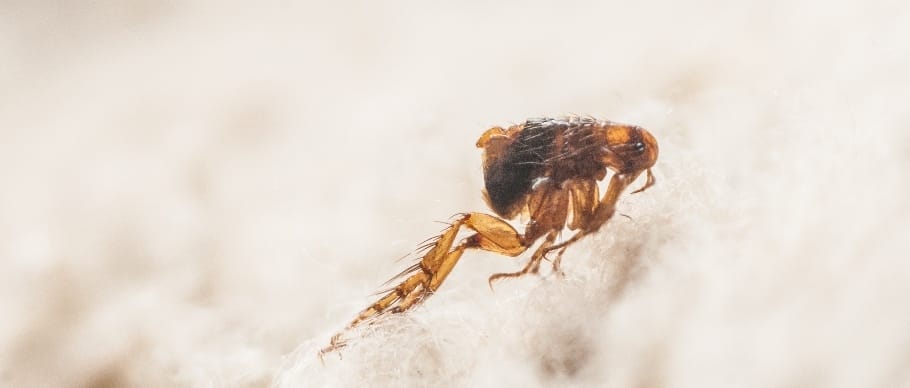
What Are Dog Fleas?
The dog flea (Ctenocephalides canis) is closely related to the cat flea and is occasionally found in North Carolina, though the cat flea is far more common on both dogs and cats. Dog fleas are small (1–3 mm), dark reddish-brown, and laterally flattened for moving through fur.
Habitat & Behavior
Dog fleas differ from cat fleas primarily in the shape of their head and genal combs (spines near the mouth), differences visible only under magnification. Their biology and behavior are very similar to cat fleas, including rapid reproduction—females can lay 20–40 eggs per day.
Flea bites on both pets and humans cause itching and discomfort. Some dogs develop flea allergy dermatitis, an allergic reaction to flea saliva that causes intense itching, hair loss, and skin infections. Dog fleas can also transmit the dog tapeworm (Dipylidium caninum).
Prevention & Control
Effective control requires a comprehensive approach: treat all pets with veterinarian-recommended flea prevention products, wash pet bedding weekly in hot water, vacuum frequently (especially areas where pets rest), and address outdoor areas where pets spend time. Flea pupae can remain dormant for months, so persistence and follow-up treatments are key.