
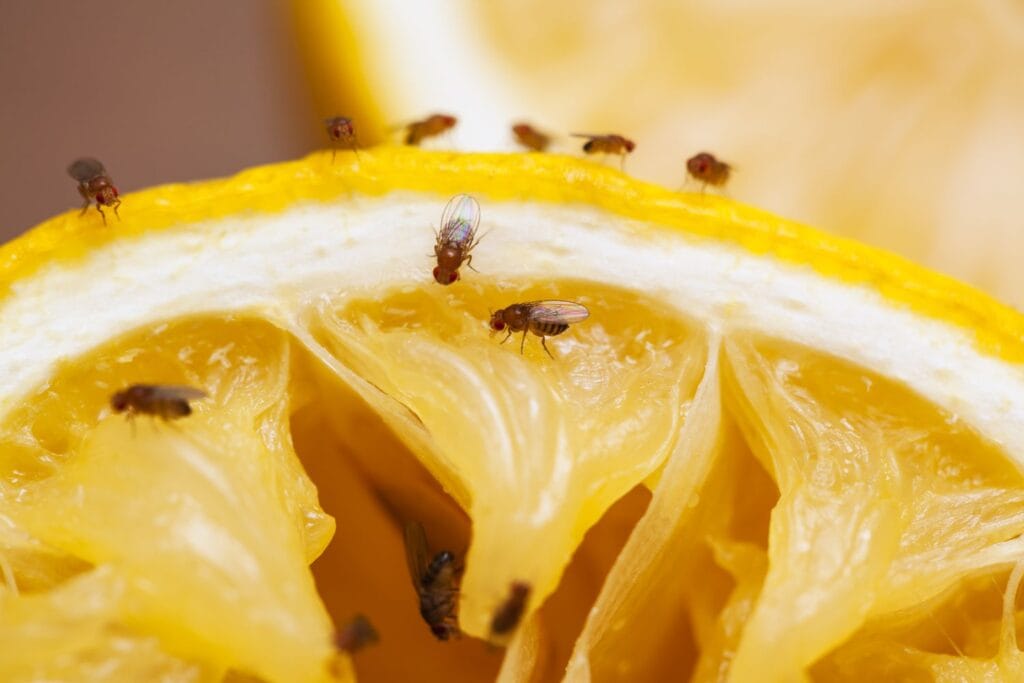
What Is the Fruit Fly?
Fruit flies (Drosophila melanogaster) are tiny flies, about 3 mm long, with tan or brownish bodies and distinctive red eyes. They are one of the most common kitchen pests in North Carolina and can seemingly appear overnight whenever ripe or fermenting fruit is left out.
Habitat & Behavior
Fruit flies are attracted to ripening fruit, vegetables, and any fermenting organic material. They also breed in drains, garbage disposals, empty bottles, trash cans, and damp mops or rags. A single female can lay up to 500 eggs, and the entire life cycle can be completed in as little as 8 days.
While fruit flies do not bite, they can contaminate food with bacteria as they move between decaying matter and fresh food. They are particularly problematic in restaurants, grocery stores, and anywhere fresh produce is stored or sold.
Prevention & Control
Elimination starts with removing breeding sources: dispose of overripe fruit, clean drains thoroughly, empty and clean trash cans regularly, and wipe down counters. Apple cider vinegar traps (a small dish with vinegar and a drop of dish soap) can capture adult flies. For persistent problems, identify and eliminate the breeding source—it could be as simple as a forgotten piece of fruit that rolled behind a counter.