
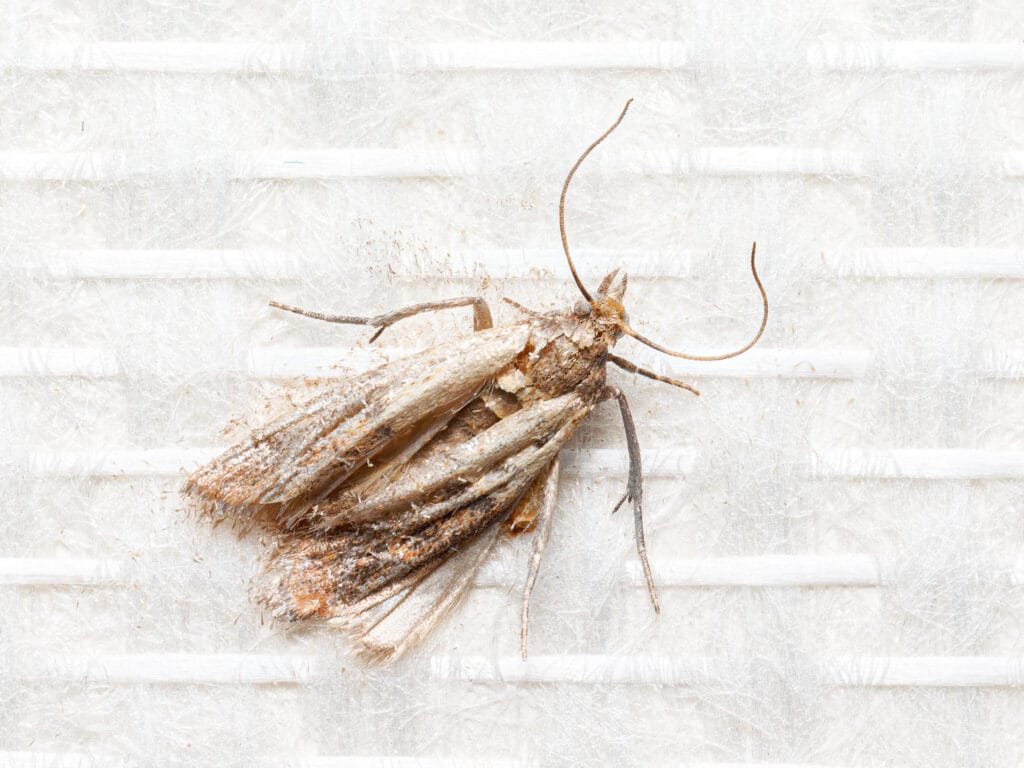
What Is the Indianmeal Moth?
The Indianmeal moth (Plodia interpunctella) is the most common stored-product pest in North Carolina homes. Adults have distinctive two-toned wings—the outer half is reddish-brown or copper while the inner half near the body is pale gray. They measure about 8–10 mm long with a wingspan of 16–20 mm.
Habitat & Behavior
Indianmeal moth larvae are the destructive stage, feeding on dried fruits, nuts, cereals, grains, spices, chocolate, pet food, birdseed, and many other stored products. The small, cream-colored larvae spin silken webbing throughout infested food, which is often the first sign of an infestation.
Infestations often begin with contaminated products brought home from the grocery store. Once established, larvae can travel significant distances to find new food sources, spreading throughout pantries and kitchen cabinets. They pupate in cracks, corners, and crevices, sometimes far from the food source.
Prevention & Control
Elimination requires finding and discarding all infested food products—inspect everything in your pantry, including unopened packages. Clean shelves thoroughly, paying attention to cracks and shelf liner edges. Store all dry goods in airtight glass or hard plastic containers. Pheromone traps can help monitor for adult moths and detect new infestations early. Severe infestations may require professional treatment of cracks and crevices where pupae are hiding.