
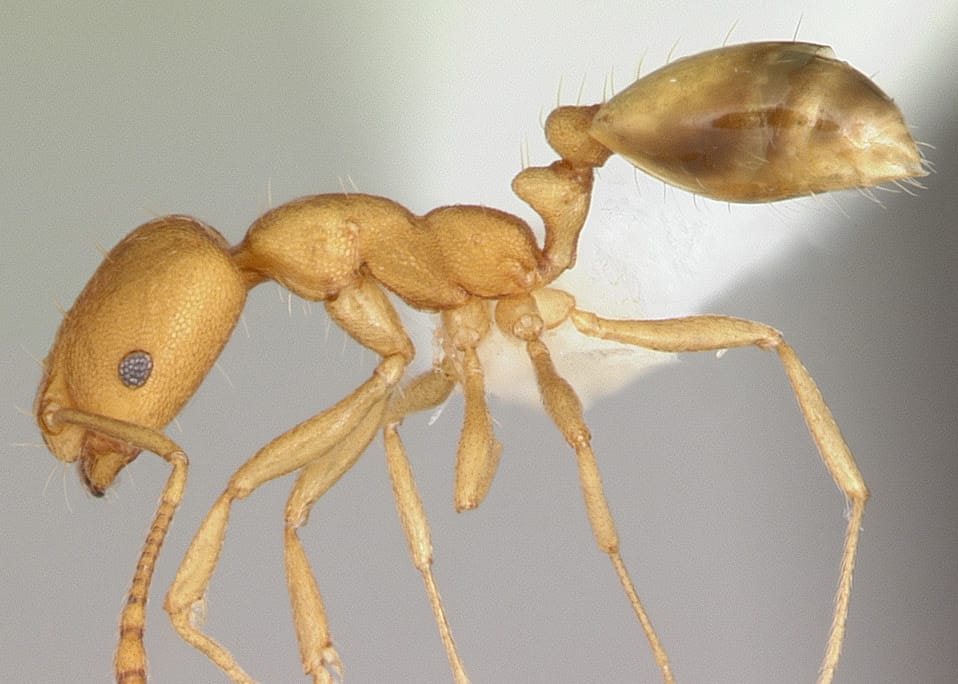
What Are Pharaoh Ants?
Pharaoh ants (Monomorium pharaonis) are tiny (about 2 mm), yellow to light brown ants that are among the most difficult household pests to control in North Carolina. Despite their small size, they pose serious problems in homes, hospitals, and food establishments.
Habitat & Behavior
Pharaoh ants nest in warm, humid, hidden locations throughout buildings: inside wall voids, behind baseboards, in cabinet hinges, behind electrical outlets, and even inside appliances. A single structure can harbor dozens of interconnected colonies, each with multiple queens.
In hospitals and care facilities, pharaoh ants are a genuine health concern—they are attracted to wounds, IV fluids, and medical equipment, and can mechanically transmit pathogens including Salmonella, Staphylococcus, and Streptococcus. In homes, they contaminate food and are nearly impossible to exclude from sealed containers.
Prevention & Control
The critical mistake with pharaoh ants is using repellent sprays, which cause “budding”—colonies split into multiple new colonies that scatter throughout the building, dramatically worsening the infestation. The ONLY effective control method is slow-acting bait that workers carry back to queens. Professional pest control with strategically placed gel and liquid baits is essential. Treatment typically takes several weeks as baits must reach every queen in the colony network.