
What Is the Stag Beetle?
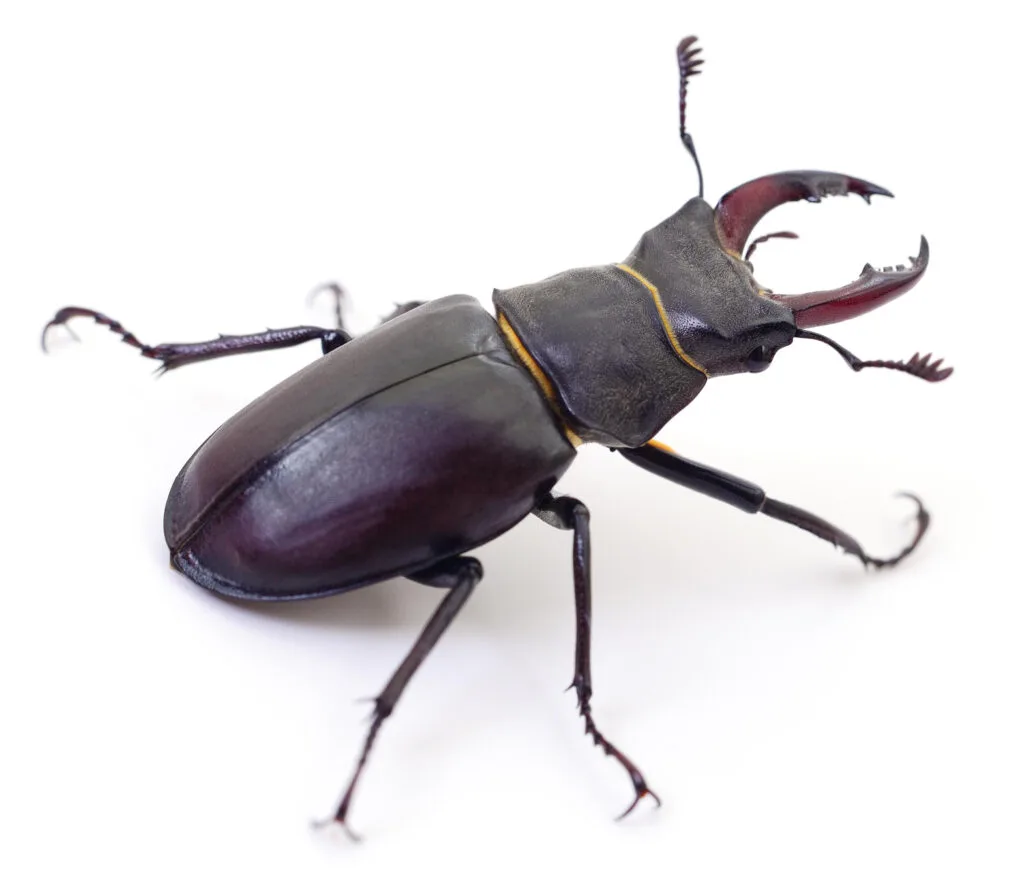
Stag beetles (family Lucanidae) are large, impressive beetles found in North Carolina’s wooded areas. Males are notable for their oversized, antler-like mandibles used in combat with other males over mating rights. Adults range from 20–60 mm depending on species, and are typically dark brown to black with a glossy sheen.
Habitat & Behavior
Stag beetle larvae develop in decaying wood—dead tree stumps, fallen logs, and buried wood—over a period of 1–3 years. The larvae are large, C-shaped white grubs that feed on rotting wood fiber. Adults emerge in late spring and summer and are attracted to lights at night.
Despite their fierce appearance, stag beetles are harmless to humans and do not damage structural wood or living trees. They only inhabit wood that is already dead and decaying. Males may pinch if handled, but their mandibles are used for display and fighting, not biting prey.
Prevention & Control
Stag beetles are beneficial decomposers that help break down dead wood and return nutrients to the soil. They are fascinating insects that are declining in many areas due to habitat loss. If you find stag beetles on your property, they are a sign of healthy woodland ecology. No pest control treatment is needed or recommended—simply leave them to go about their important ecological work.