
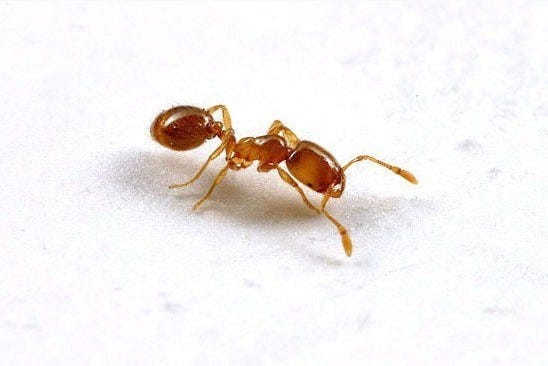
What Are Thief Ants?
Thief ants (Solenopsis molesta) are among the smallest ants in North Carolina, measuring only 1–1.5 mm long. They are pale yellow to light brown and can be difficult to see with the naked eye. They get their name from their habit of nesting near larger ant colonies and stealing their food and brood.
Habitat & Behavior
Thief ants nest in soil, under rocks, in wall voids, and behind baseboards. Their tiny size allows them to enter homes through the smallest cracks and crevices. They are commonly found trailing along kitchen counters, in cabinets, and near pet food bowls.
These ants have a strong preference for greasy, high-protein foods—cheese, meat, nuts, peanut butter, and animal fats. This preference for greasy foods distinguishes them from most other small ants that prefer sweets. They also feed on dead insects and can be found in stored food products.
Prevention & Control
Thief ants are difficult to control because of their extremely small size, which allows them to access areas other ants cannot. Standard ant baits designed for sweet-feeding ants are often ineffective. Professional treatment with protein-based or grease-based baits specifically formulated for thief ants is typically required. Thoroughly sealing all cracks and crevices and storing food in airtight containers helps reduce their access to food sources.