
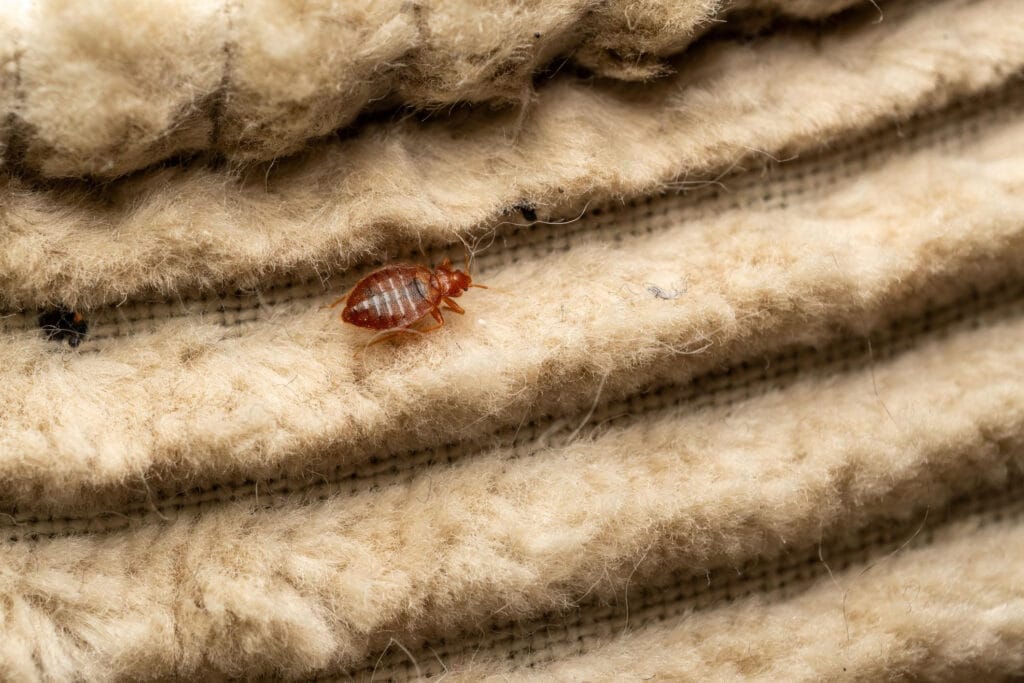
What Is the Tropical Bed Bug?
The tropical bed bug (Cimex hemipterus) is a close relative of the common bed bug that is occasionally found in North Carolina, particularly in warmer coastal and urban areas. It is nearly identical to the common bed bug in size and appearance—flat, oval, reddish-brown, and about the size of an apple seed.
Habitat & Behavior
Tropical bed bugs share the same habits as common bed bugs: they hide in mattress seams, furniture crevices, and wall voids during the day and emerge at night to feed on human blood. Their bites produce similar itchy welts. The two species can only be reliably distinguished through microscopic examination of their physical features.
What makes tropical bed bugs noteworthy is that they may have different insecticide resistance profiles than common bed bugs. Treatments effective against one species may be less effective against the other, which is why professional identification is important when bed bugs are found.
Prevention & Control
Prevention and treatment approaches are the same as for common bed bugs: inspect hotel rooms when traveling, encase mattresses and box springs in bed bug-proof covers, reduce clutter near sleeping areas, and seek professional treatment immediately if bed bugs are detected. Heat treatment is effective against both species regardless of chemical resistance. Early detection through regular inspection is the best defense.