
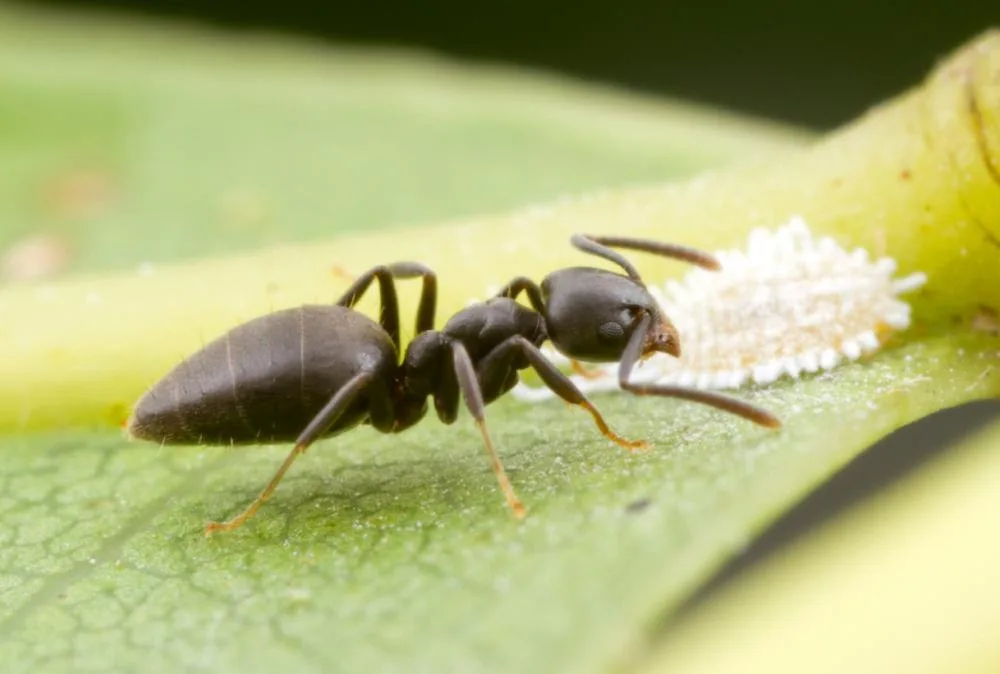
What Are White-footed Ants?
White-footed ants (Technomyrmex difficilis) are small (about 2.5–3 mm), dark brown to black ants with distinctive pale yellowish-white feet. Originally from Asia, they have become established in coastal areas of North Carolina and are considered an emerging pest species.
Habitat & Behavior
White-footed ant colonies are enormous—a single colony can contain over one million individuals with hundreds of thousands of reproductive females. Unlike most ant species where only the queen reproduces, about half of a white-footed ant colony consists of fertile, egg-laying females called “intercastes.” This reproductive strategy makes their populations exceptionally difficult to control.
These ants feed primarily on honeydew from aphids, scale insects, and mealybugs, as well as sweet household foods. They form long, dense trailing lines along building exteriors, tree trunks, and utility lines. They commonly nest in trees, attics, wall voids, and under roof shingles.
Prevention & Control
White-footed ants do not bite or sting and are primarily a nuisance pest, but their sheer numbers and persistent trailing can be overwhelming. Traditional baiting is less effective because intercastes do not share food with the rest of the colony through trophallaxis (mouth-to-mouth feeding). Professional control requires a combination of non-repellent sprays, targeted baits, and reduction of honeydew-producing insects on surrounding landscape plants.