
Family-owned and serving Raleigh from our Bastion Lane headquarters since 1964. Licensed, pet-friendly technicians who know exactly where Raleigh mosquitoes breed — and how to stop them at the source.
Raleigh is one of the fastest-growing cities in the country — and unfortunately, it's also one of the most mosquito-active. Crabtree Creek, the Neuse River Greenway, Walnut Creek, and dozens of HOA retention ponds create hundreds of miles of standing and slow-moving water running directly through Raleigh neighborhoods. Clegg's Pest Control has been serving Raleigh homeowners from our headquarters office on Bastion Lane since 1964. Rated 4.8 out of 5 stars across thousands of NC reviews, our licensed technicians know exactly where Raleigh mosquitoes breed, when populations peak, and which treatment approach stops them at the source.
Whether you back up to the Neuse River Trail in Hedingham, live near one of Brier Creek's many retention ponds, or have a mature wooded lot inside the Beltline, a customized Clegg's mosquito control treatment plan significantly reduces populations on your property so you can actually use your yard again. We serve every Raleigh neighborhood — from Wake Forest Road and North Hills down to Lake Wheeler Road and Garner.
- Licensed & insured local technicians
- Board-certified entomologist on staff
- Pet- and family-safe treatments
- Free inspection within 24 hours
What Raleigh Homeowners Say About Clegg's
Why Raleigh Has a Serious Mosquito Problem
Raleigh's geography sets up a perfect mosquito environment. The city sits in the NC Piedmont with heavy clay soils that hold water after rain, an average of 46 inches of annual rainfall, and a long warm season that keeps mosquitoes active from April through October. Layer on top of that the more than 100 miles of greenway trails weaving through forested floodplains and creek corridors, and Raleigh becomes a particularly difficult city to manage mosquito populations in.
Raleigh's rapid development adds to the problem. New subdivisions clear land and regrade lots, disrupting drainage patterns and creating unintended ponding. Every new HOA pond installed for stormwater management is also potential mosquito habitat when left untreated. The city's Wake County Vector Control program focuses primarily on public areas like roadsides and parks — private residential property is yours to manage. That's where Clegg's comes in.
Where Mosquitoes Breed Around Raleigh Homes
Mosquitoes need as little as a bottle cap of standing water to breed. In Raleigh, breeding sites are everywhere — many homeowners don't even notice them. Here are the most common sources on and around Raleigh properties:
HOA Retention Ponds
Extremely common in Brier Creek, Hedingham, and Wakefield. Slow-moving edges breed Southern House Mosquitoes by the thousands.
Creek & Greenway Corridors
Crabtree Creek, Neuse River, and Walnut Creek floodplains create massive, naturally replenished breeding zones adjacent to residential yards.
Tree Holes & Leaf Debris
Mature oak and hardwood canopy common inside the Beltline and North Raleigh traps water in cavities. Asian Tiger Mosquitoes breed here.
Clogged Gutters
Raleigh's hardwood canopy drops leaves year-round. Gutters that aren't cleaned every fall become standing-water incubators by spring.
Yard Containers
Flower pots, buckets, toys, tarps, and birdbaths. Asian Tiger Mosquitoes — Raleigh's most aggressive daytime biters — are container specialists.
HVAC Condensate Drainage
Central AC units drain continuously during Raleigh summers. Discharge lines that pool near the foundation are a hidden mosquito source.
Low-Lying Yard Areas
Raleigh's clay soils don't drain quickly. Yard depressions, swales, and improperly graded lots hold water for days after a typical afternoon storm.
Ornamental Water Features
Still decorative ponds and fountains without aerators or fish are prime breeding sites. Even a birdbath refreshed infrequently poses a risk.
Mosquito Pressure by Raleigh Property Type
Mosquito intensity varies significantly depending on where you live in Raleigh. Your proximity to water, your lot size, and the age of your landscaping all affect how aggressive the mosquito season will feel in your yard.
Greenway-Adjacent Homes
Homes that back up to the Neuse River Greenway, Crabtree Creek Greenway, or Walnut Creek Trail are in direct contact with wooded floodplain — some of the highest-density mosquito habitat in the Raleigh metro. Even with a solid fence, adult mosquitoes travel 300–600 feet from breeding sources. Residents of these neighborhoods typically need recurring monthly treatments throughout the season, with a focus on vegetation barrier sprays along the property line.
HOA Communities with Stormwater Ponds
Nearly every subdivision built in northwest and north Raleigh through the 2000s and 2010s includes at least one engineered retention pond. These ponds aren't treated by the HOA or the city, and their shallow edges — often ringed by ornamental grass and cattails — are ideal mosquito nurseries. Homes within 200 feet of an HOA pond consistently report the worst mosquito pressure in Raleigh. Clegg's can treat the pond edges directly as part of your service plan.
Inside the Beltline — Mature Canopy Lots
The older, established neighborhoods inside I-440 are beloved for their large lots and tree canopy — but that same canopy creates a cooler, shadier microclimate that mosquitoes prefer for resting during the heat of the day. The Asian Tiger Mosquito (Aedes albopictus) is particularly problematic in these neighborhoods because it breeds in tiny containers and tree cavities, and it bites aggressively during daylight hours. Foliage barrier treatments targeting resting areas are the most effective solution here.
New Construction Neighborhoods
Newly developed communities face a different type of mosquito pressure. Land clearing and grading disrupt natural drainage, and fresh construction often leaves compacted areas that pool during rain. Many new Raleigh homeowners are surprised to find that their brand-new neighborhood has a significant mosquito problem — the solution is early-season treatment before populations establish, combined with source reduction around the property.
Raleigh's Mosquito Season: What to Expect
Raleigh's long, warm seasons mean mosquito activity spans seven months. Here's what to expect — and when to schedule treatments — to stay ahead of the curve.
Raleigh's Most Trusted Mosquito Control Since 1964
60+ years protecting NC homes. 250,000+ customers served. Free inspections — response within 24 hours.
How Clegg's Controls Mosquitoes in Raleigh
Effective mosquito control in Raleigh requires more than just spraying — it requires targeting both adult mosquitoes and the breeding sources that replenish populations after every rain. Here's what a Clegg's mosquito treatment looks like from start to finish:

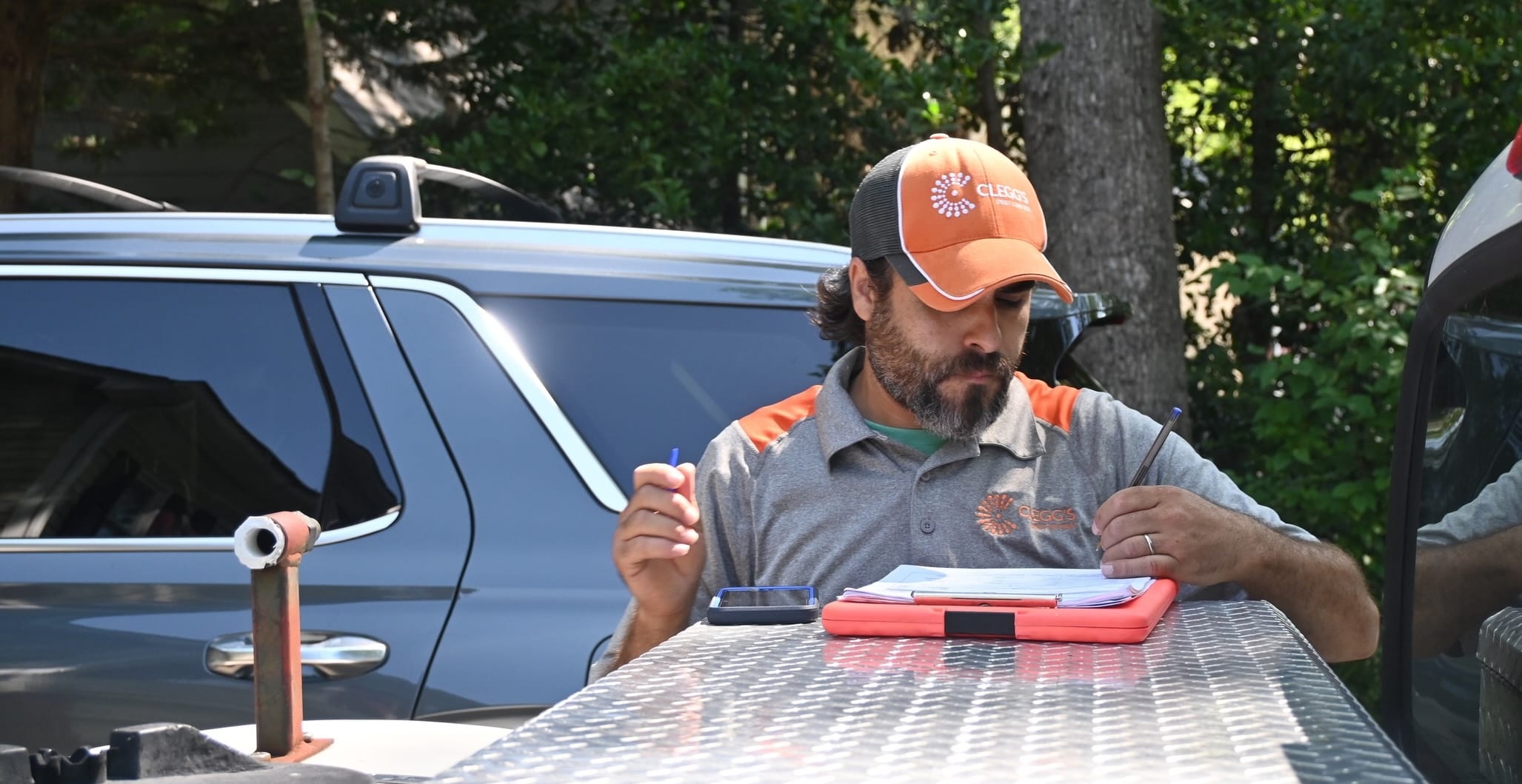
A Clegg's technician treating a Raleigh home for mosquitoes and general pest activity.
Property Inspection
Your Clegg's technician walks the property to identify active breeding sites — HOA pond edges, low spots in the yard, containers, clogged gutters, tree holes, and greenway proximity. We map high-risk zones before applying any treatment.
Vegetation Barrier Treatment
Adult mosquitoes rest in shaded vegetation — shrubs, groundcover, ornamental grasses, and tree understory — during the heat of the day. We apply a fine mist treatment to these resting sites, which eliminates adults present and provides residual protection for 3–4 weeks.
Larval Source Control
Where standing water can't be eliminated — HOA pond edges, drainage ditches, ornamental ponds — Clegg's applies larvicide that targets mosquito larvae before they hatch into adults. This is especially important for pond-adjacent properties in Brier Creek and Hedingham.
Detailed, Property-Specific Treatment Plans
Every Raleigh property is different. Our technicians document the specific mosquito pressure points at your home — retention pond proximity, greenway distance, tree canopy coverage — and build a treatment plan around your exact conditions. No cookie-cutter programs.
Call (919) 231-0600Recurring Monthly Service
A single treatment lasts 3–4 weeks. Because Raleigh's summer thunderstorms replenish breeding sites constantly, recurring monthly service from April through October is what maintains meaningful population reduction. One-time treatments provide temporary relief; a seasonal plan actually solves the problem.
Pet- and Family-Safe Products
Clegg's treatments are safe for children and pets once the application has dried — typically 30–45 minutes after treatment. Our technicians follow all NC Department of Agriculture licensing and application guidelines. If you have specific sensitivities, let your technician know before the visit.
Raleigh Neighborhoods & Areas We Serve
Clegg's provides mosquito control services throughout the City of Raleigh and surrounding Wake County communities. Our technicians are familiar with the specific mosquito pressures in each part of the city — from the greenway-adjacent yards of northeast Raleigh to the mature lots of established inside-the-Beltline neighborhoods.
FAQs About Mosquito Control in Raleigh
Ready to Take Back Your Raleigh Yard?
Free inspections. Same-day emergency response available. No long-term contracts required. Call our Raleigh headquarters today.